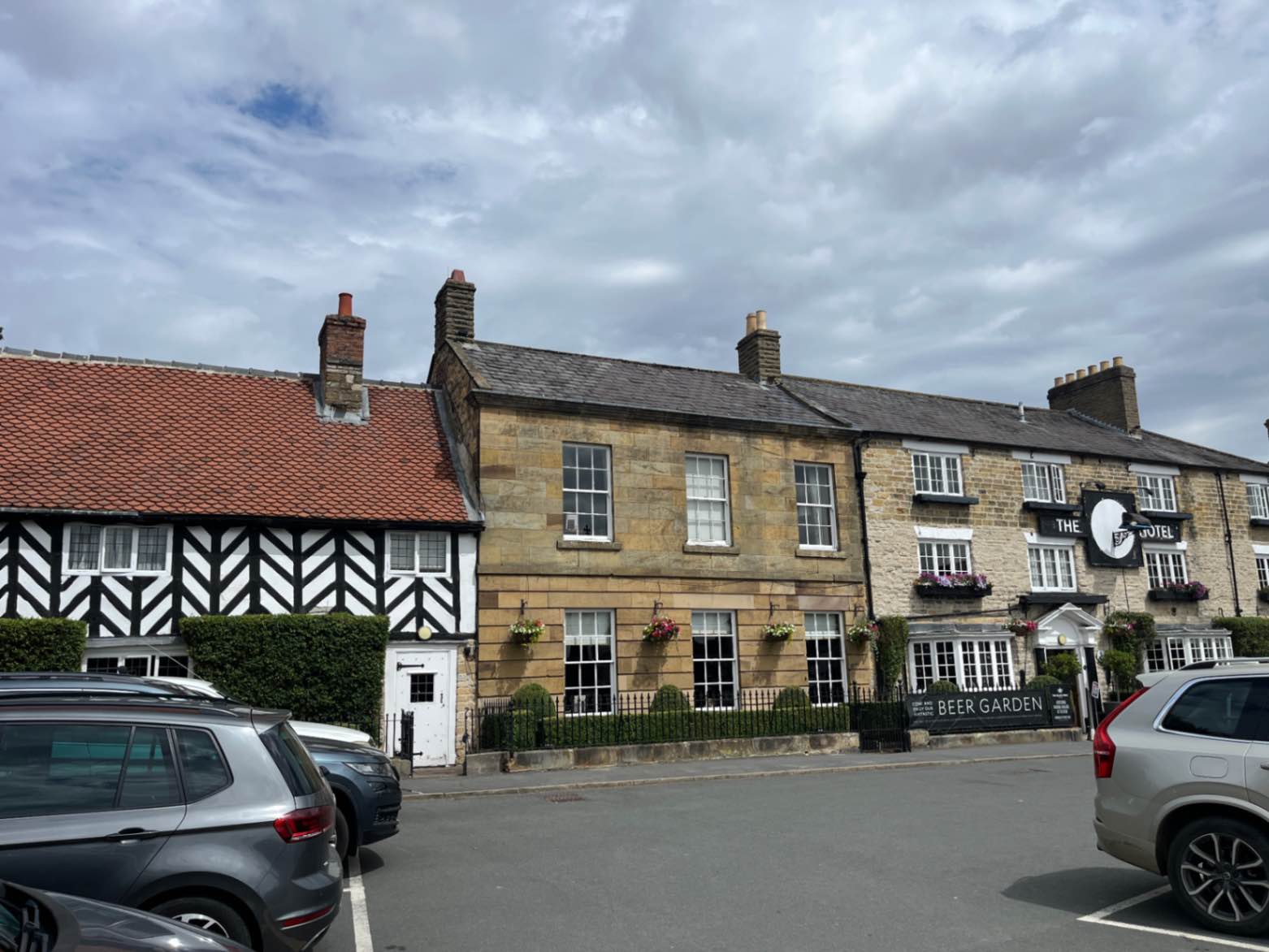
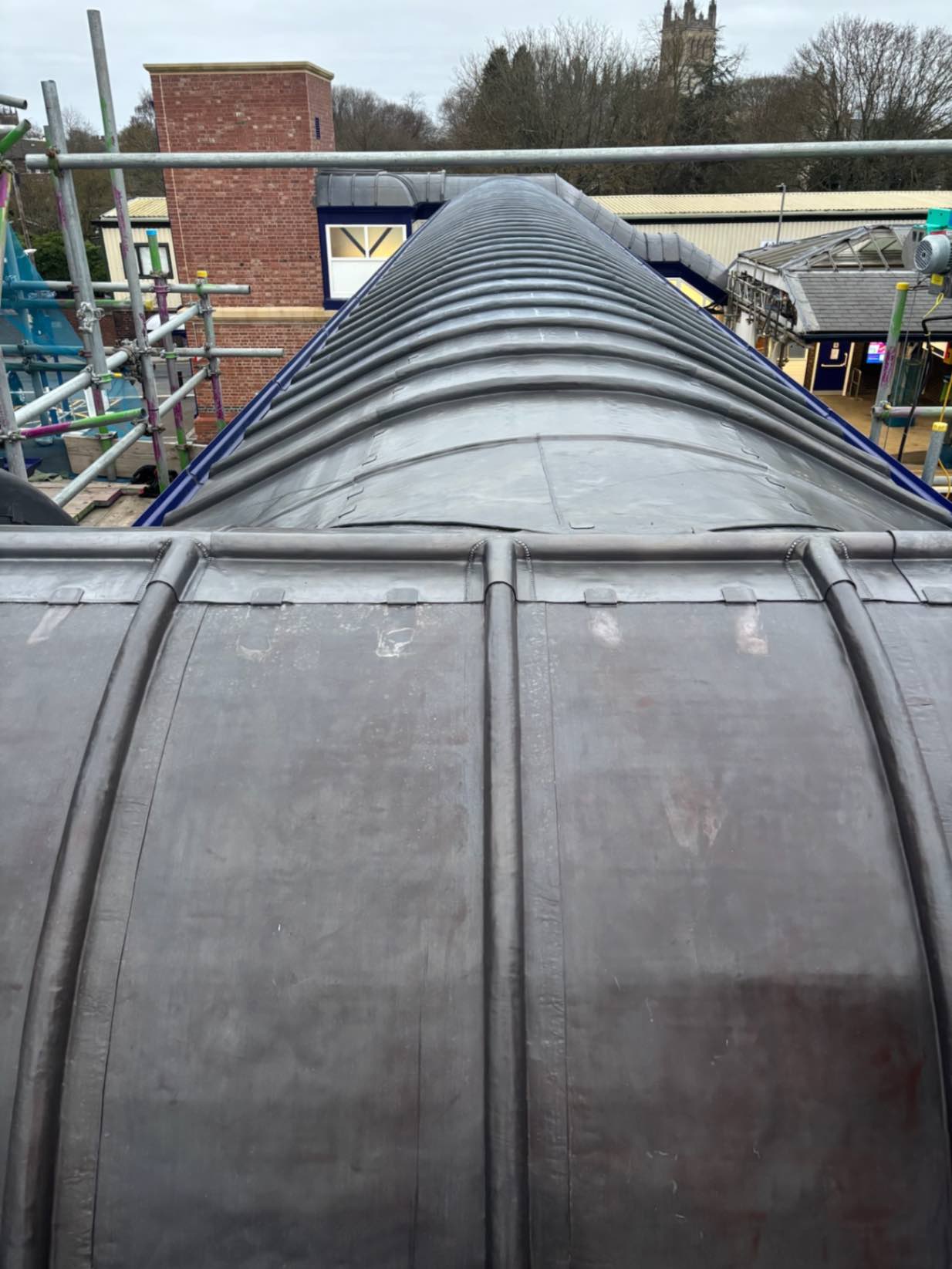
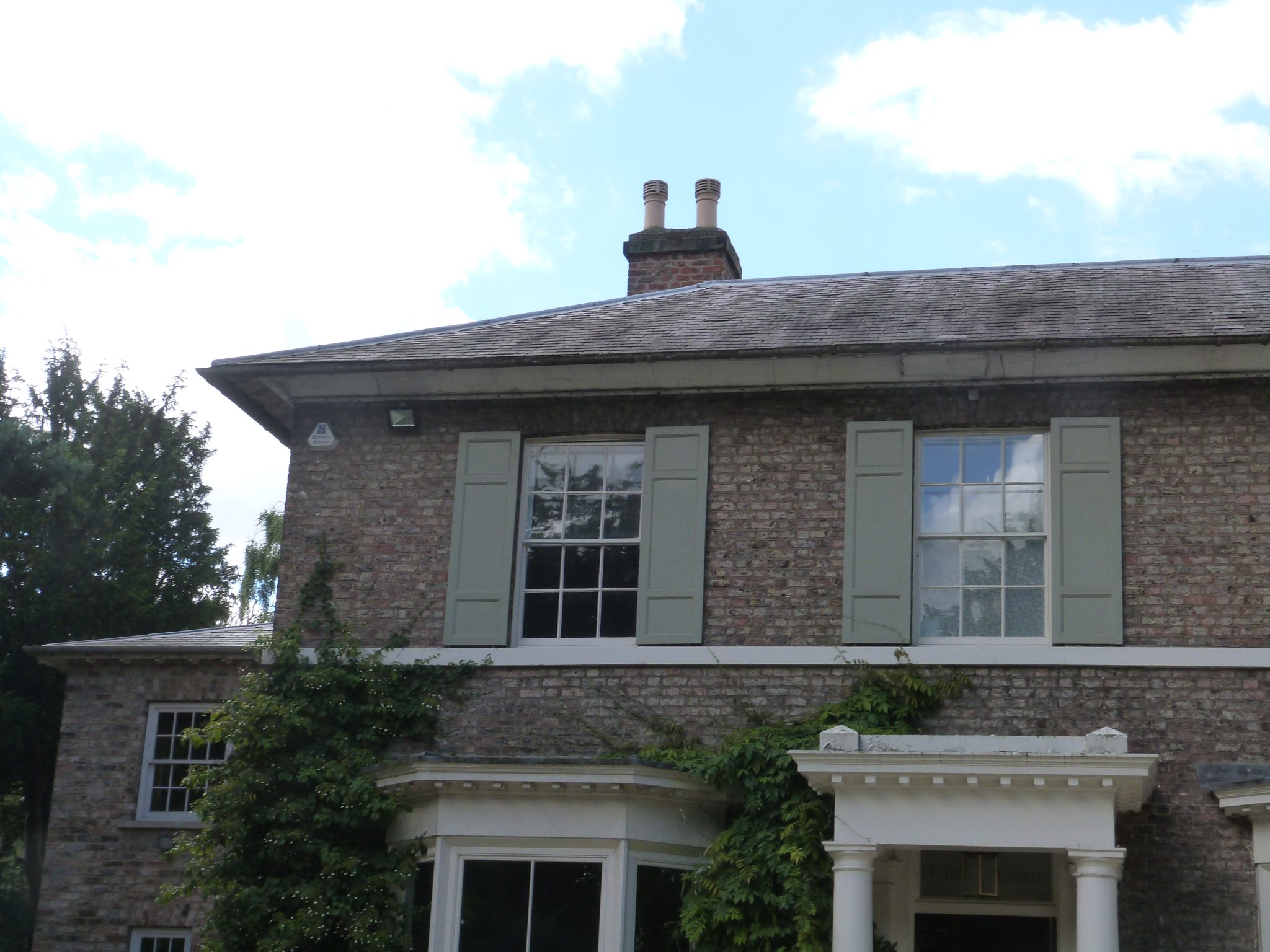
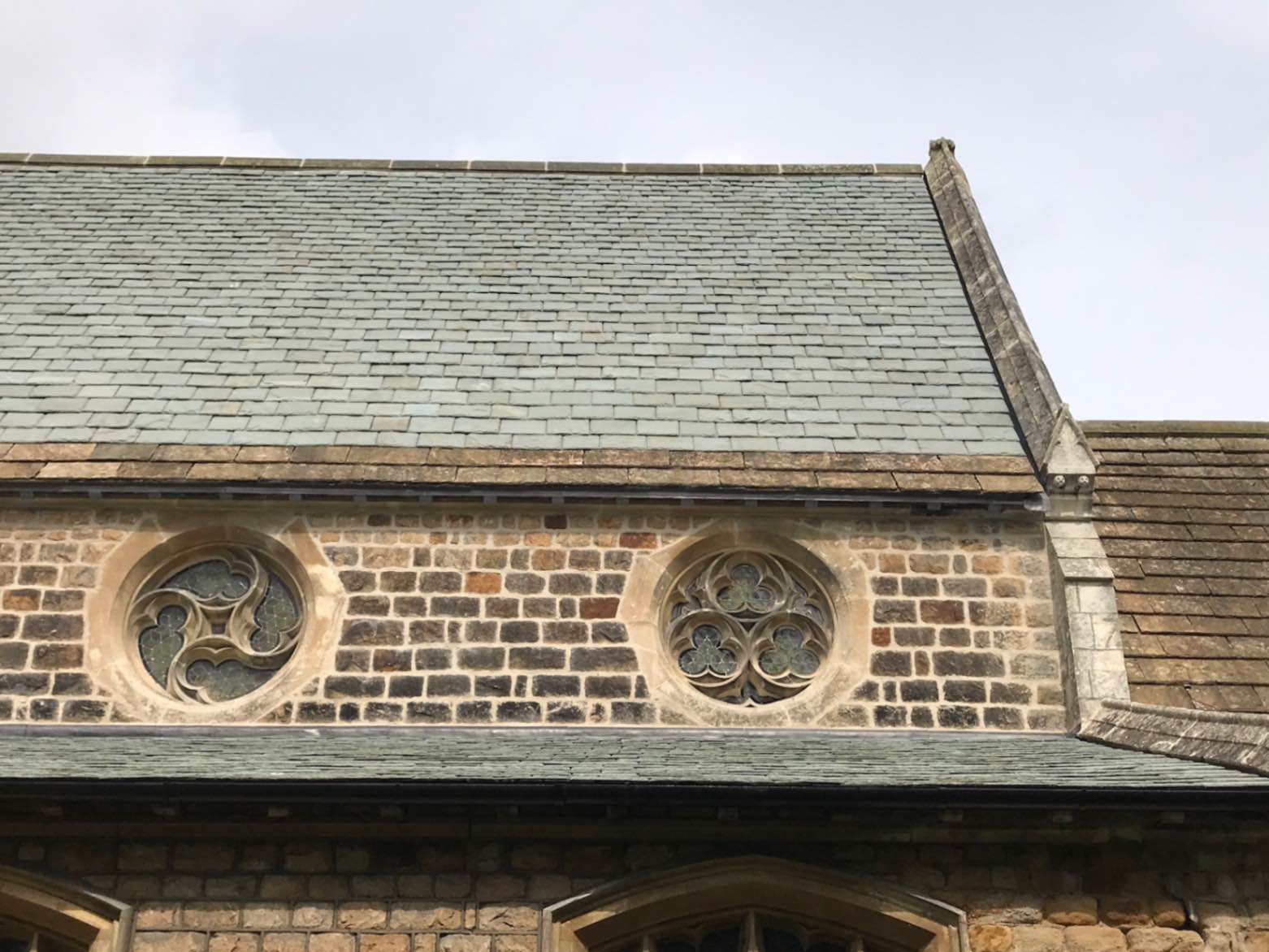
Specialist heritage roofing for listed buildings, churches, period homes, estates and historic properties across York, Yorkshire and the North of England. Natural slate, traditional leadwork, clay tiles, chimneys, masonry, roof joinery, rainwater systems and conservation-sensitive roof restoration.
Neal Roofing undertakes the repair, conservation and renewal of historic roofs throughout York, Yorkshire and the wider North of England. Our work includes listed buildings, churches, period homes, estates, schools and architecturally significant commercial properties.
Heritage roofing requires judgement as well as craftsmanship. The objective is not simply to replace the visible roof covering. The existing construction, significance of retained fabric, condition of materials, moisture behaviour and interfaces between different elements all need to be understood before an appropriate repair strategy can be developed.
Our work extends across the roof envelope, allowing natural slate, clay tiles, lead gutters, chimneys, parapets, masonry, timber details and traditional rainwater systems to be considered as interconnected parts of the same building.
Neal Roofing is the trading identity of Geoff Neal (Roofing) Limited, established in 1981. The company is included on the NFRC Heritage Register, supporting our longstanding involvement with traditional and conservation-sensitive roofing.
View Client Information About Neal Roofing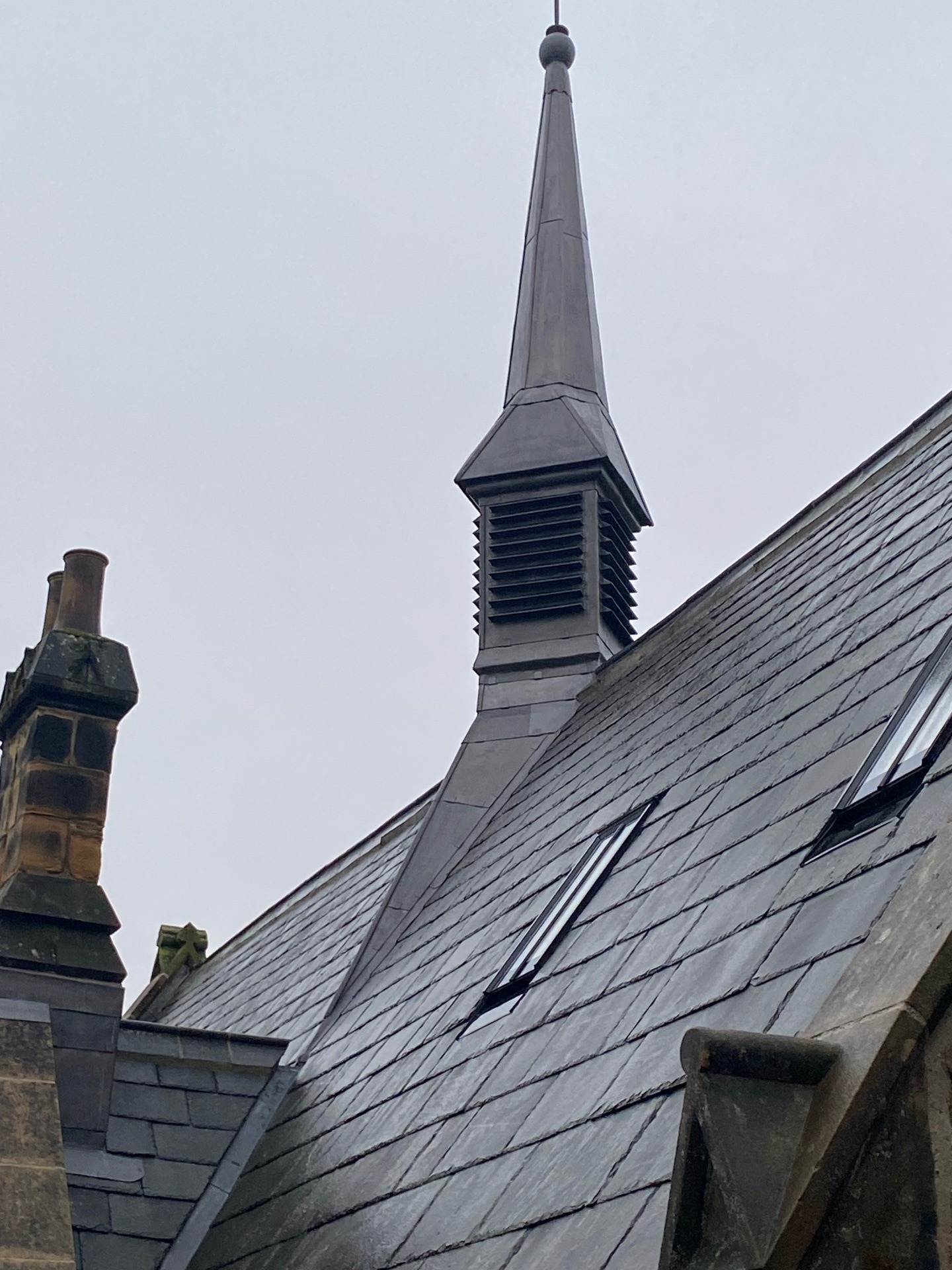
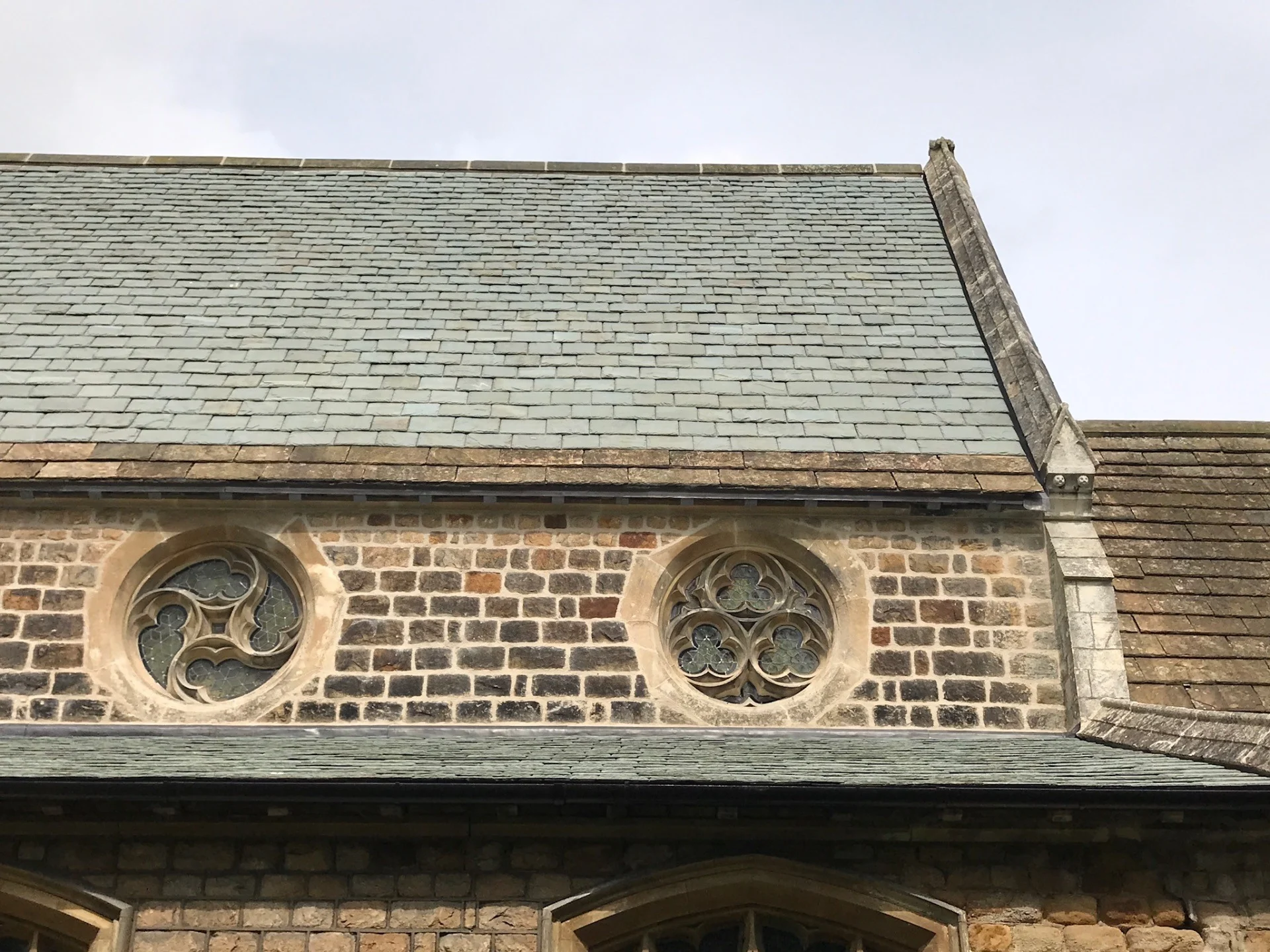
Natural slate, stone slate, reclaimed material, random widths, diminishing courses and conservation-sensitive roof renewal.
Explore Slating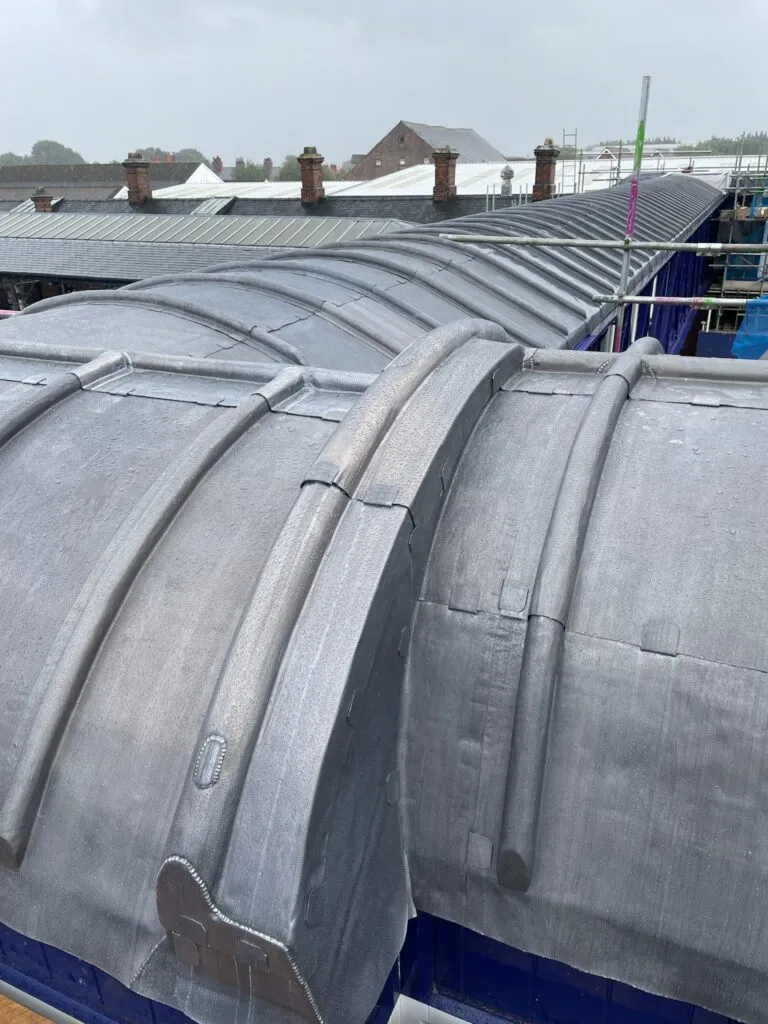
Lead gutters, valleys, roofs, flashings, dormers, parapets and complex weathering details for historic buildings.
Explore Leadwork
Roofing, masonry, joinery, leadwork, chimneys and rainwater goods coordinated around the needs of the historic building.
Explore ConservationThe correct intervention depends upon the condition of the roof and the significance of the existing fabric. Some buildings require carefully targeted repairs; others require phased refurbishment or complete roof renewal.
Not every historic roof requires complete replacement. Localised failure frequently develops at valleys, gutters, flashings, chimneys, parapets, rooflights and rainwater outlets while substantial areas of the original roof remain capable of continued service.
Targeted work may include:
Where coverings, fixings or supporting construction have reached the end of their serviceable life, Neal Roofing can undertake complete roof renewal, including careful stripping, salvage, sorting and reuse of suitable historic material where appropriate.
Historic roofing projects frequently involve several interconnected trades. Separating those elements between unrelated contractors can create gaps in responsibility at some of the most vulnerable interfaces.
Depending upon the project, Neal Roofing can coordinate:
This allows responsibility for the critical interfaces of the historic roof envelope to be coordinated through one specialist roofing contractor.
Building Conservation Services Discuss a Heritage ProjectA successful heritage roofing project begins with the existing building. Before deciding how much work should be undertaken, consideration should be given to what survives, why defects have developed, what can reasonably be retained and how proposed changes may affect the character and performance of the roof.
Assessment should consider the age, roof form, materials, construction, historic significance, previous alterations and known defects.
Sound historic material should ordinarily be retained where doing so is practical, appropriate and compatible with the long-term performance of the roof.
Natural slate, clay tiles, leadwork, timber and masonry may therefore be retained, repaired, supplemented or replaced according to their condition and the requirements of the project.
Replacement materials should be compatible with the existing building and visually appropriate to its character and setting.
Depending upon the project, this can involve:
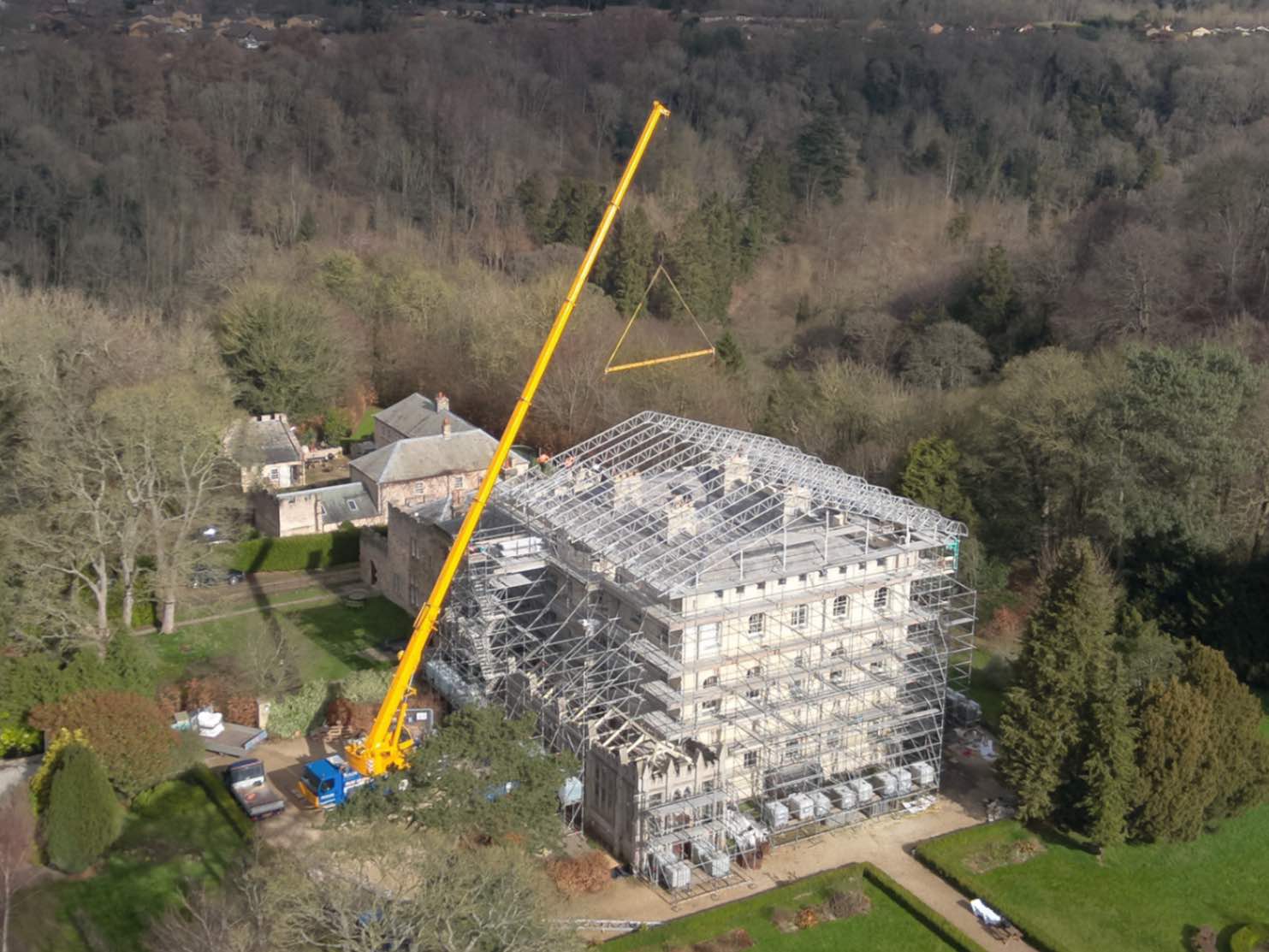
Historic buildings require careful access, temporary weathering, controlled storage and protection of retained fabric. Sequencing should minimise unnecessary exposure and disturbance while allowing defects revealed during the works to be properly assessed.
Book a Heritage Roofing Inspection
Our heritage work ranges from individual period properties to churches, estates, schools and substantial listed-building projects delivered alongside professional teams.
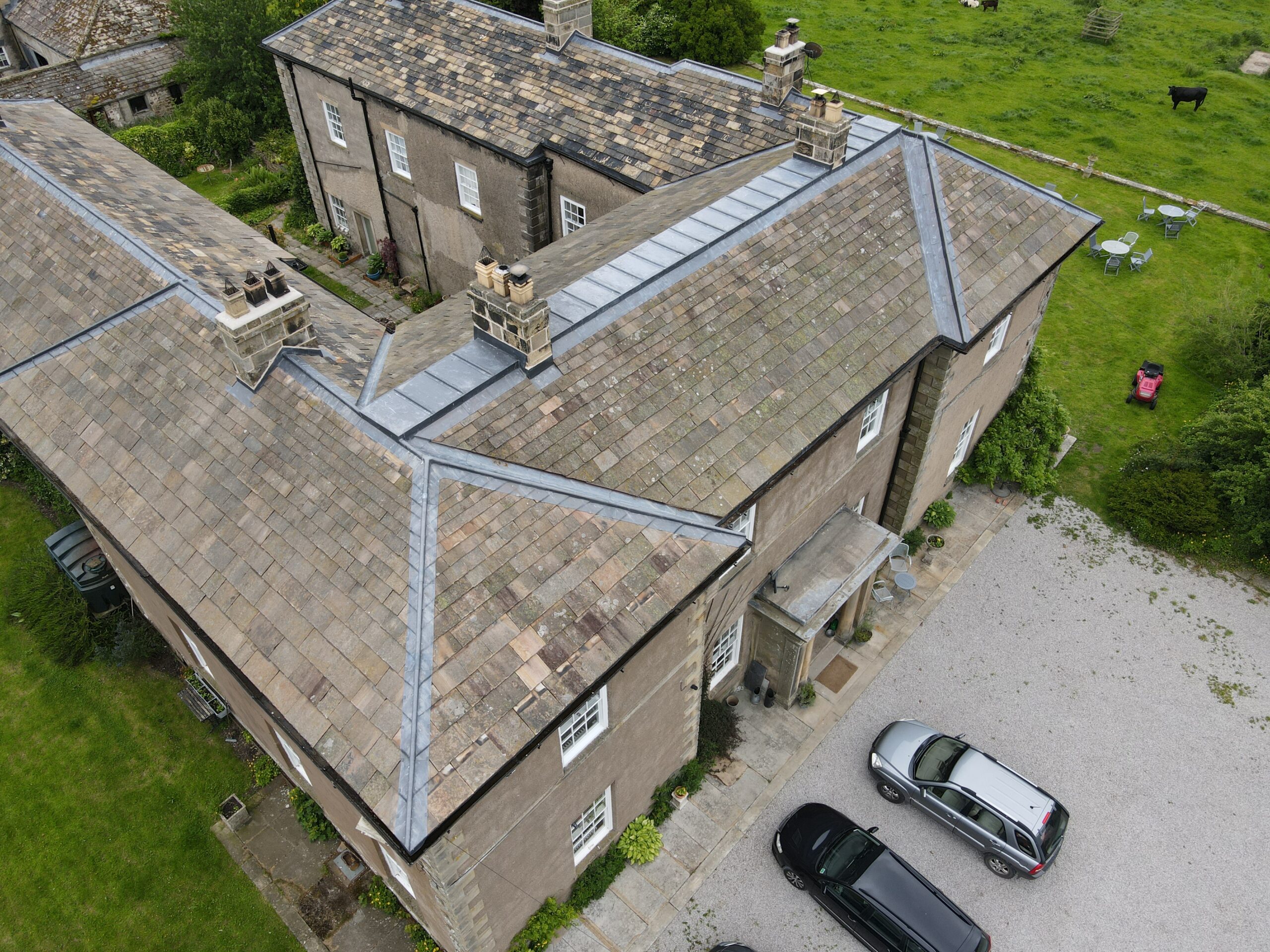
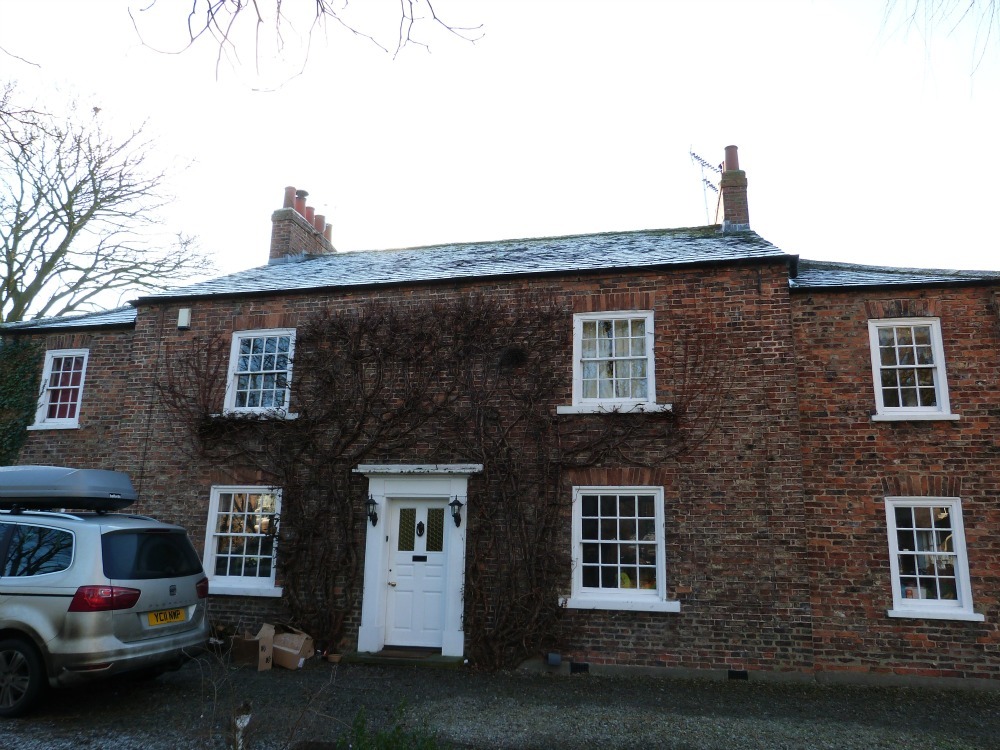
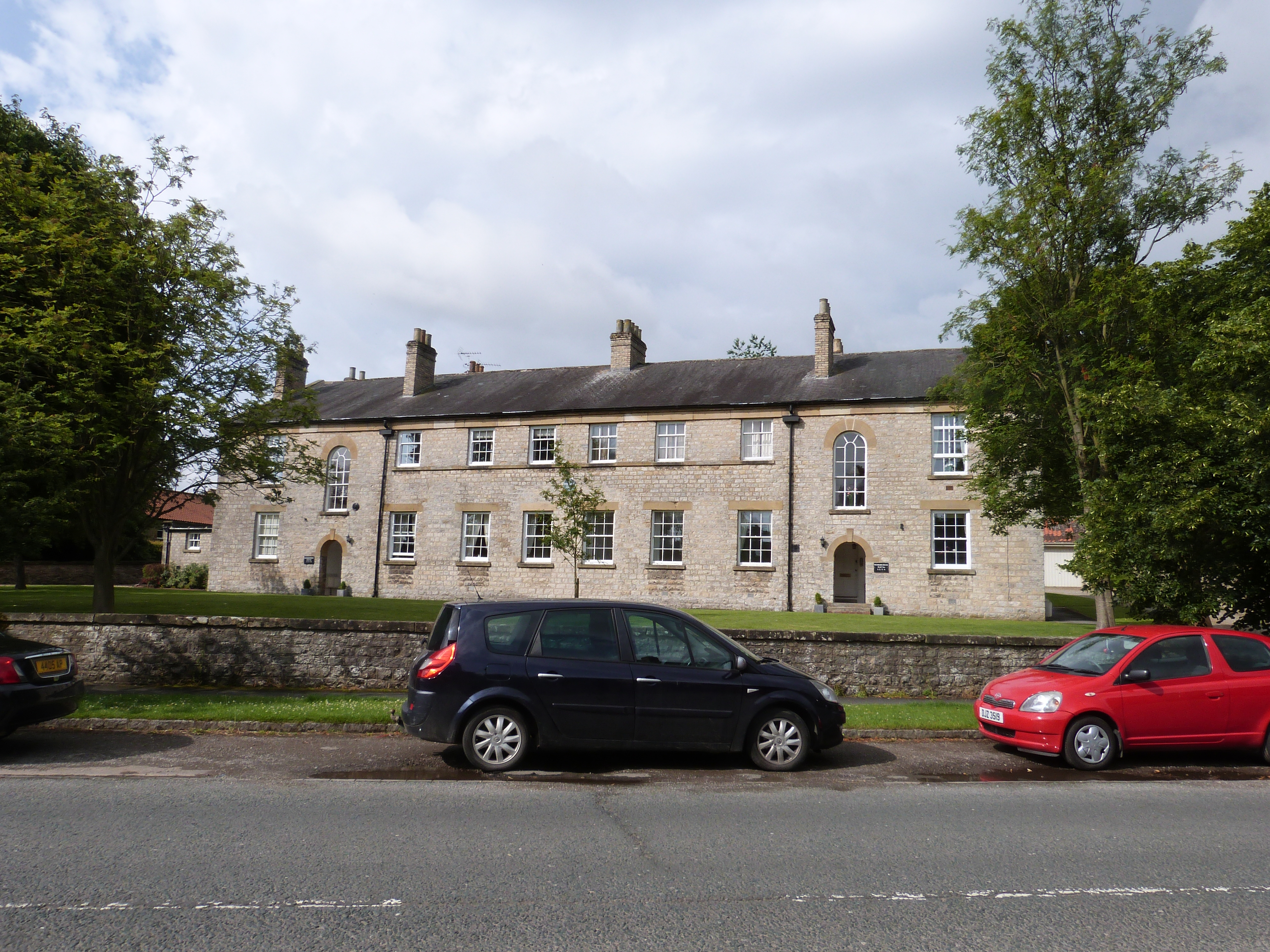
Grade I, Grade II*, Grade II and other historically significant residential properties, including Georgian and Victorian townhouses, manor houses, farmhouses and conservation-area homes.
Churches, chapels, towers, vestries and associated buildings requiring traditional slating, leadwork, masonry interfaces and rainwater management.
Ecclesiastical RoofingPrivate estates, schools, civic buildings, historic commercial property, traditional outbuildings and architecturally sensitive sites.
Tendering, material assessment, sample panels, practical detailing, opening-up and delivery against professional drawings and specifications.
Planned maintenance, phased repairs, defect investigation and roof-envelope refurbishment across individual buildings or property portfolios.
Practical advice and project delivery for owners responsible for maintaining and protecting important historic buildings.
York and North Yorkshire contain an exceptional concentration of historic buildings, from medieval structures and Georgian townhouses to Victorian institutions, churches, estates, farmhouses and traditional outbuildings.
Roofing within this environment requires an understanding of traditional construction alongside contemporary requirements for safe access, weather protection, moisture management and regulatory compliance.
From our base near York, Neal Roofing undertakes heritage roofing projects throughout the city, North Yorkshire and the wider region.
Material selection should preserve the building’s character while supporting reliable long-term performance. Existing fabric, regional context, consent requirements and compatibility with adjoining construction all influence the appropriate specification.
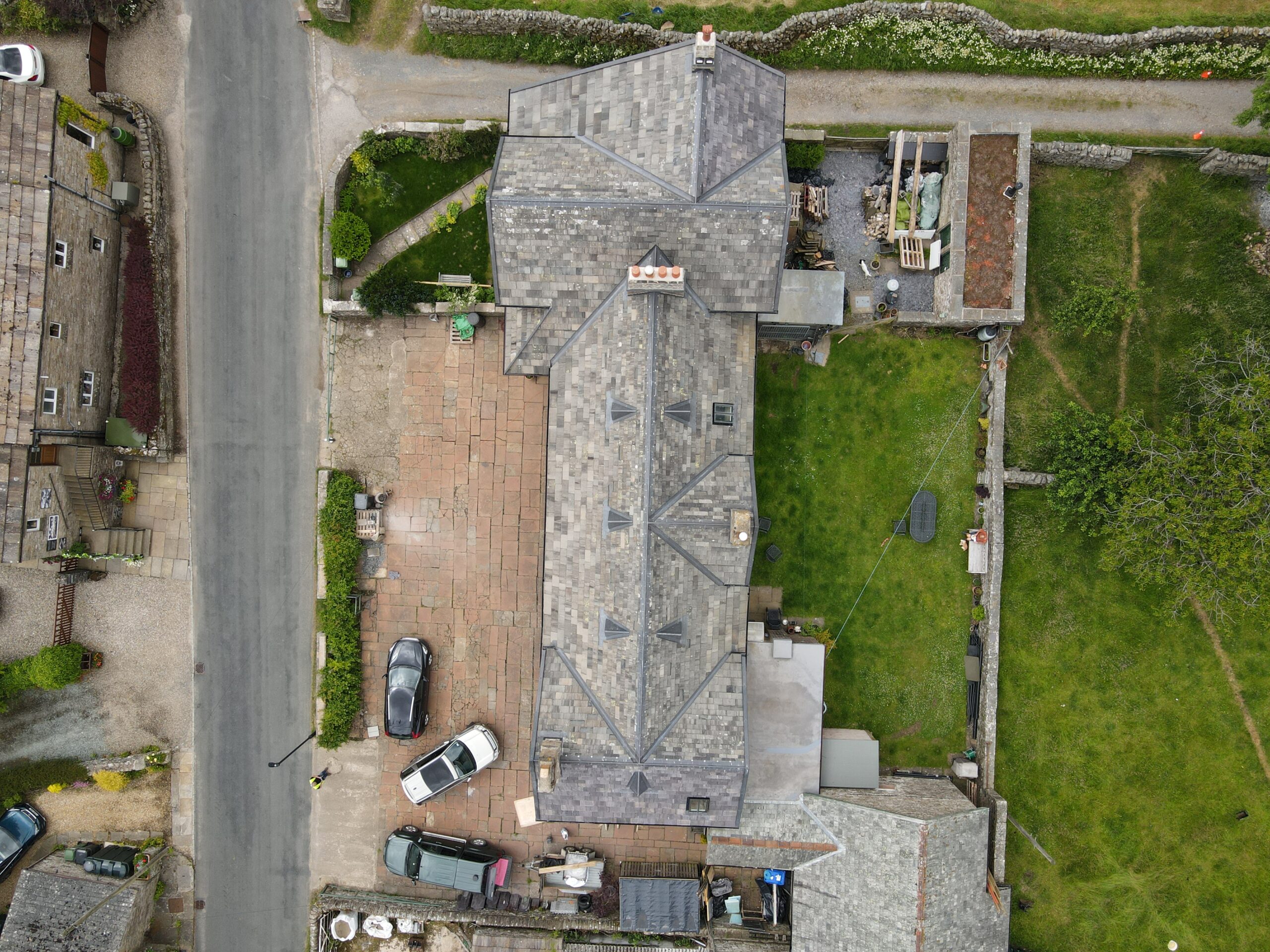
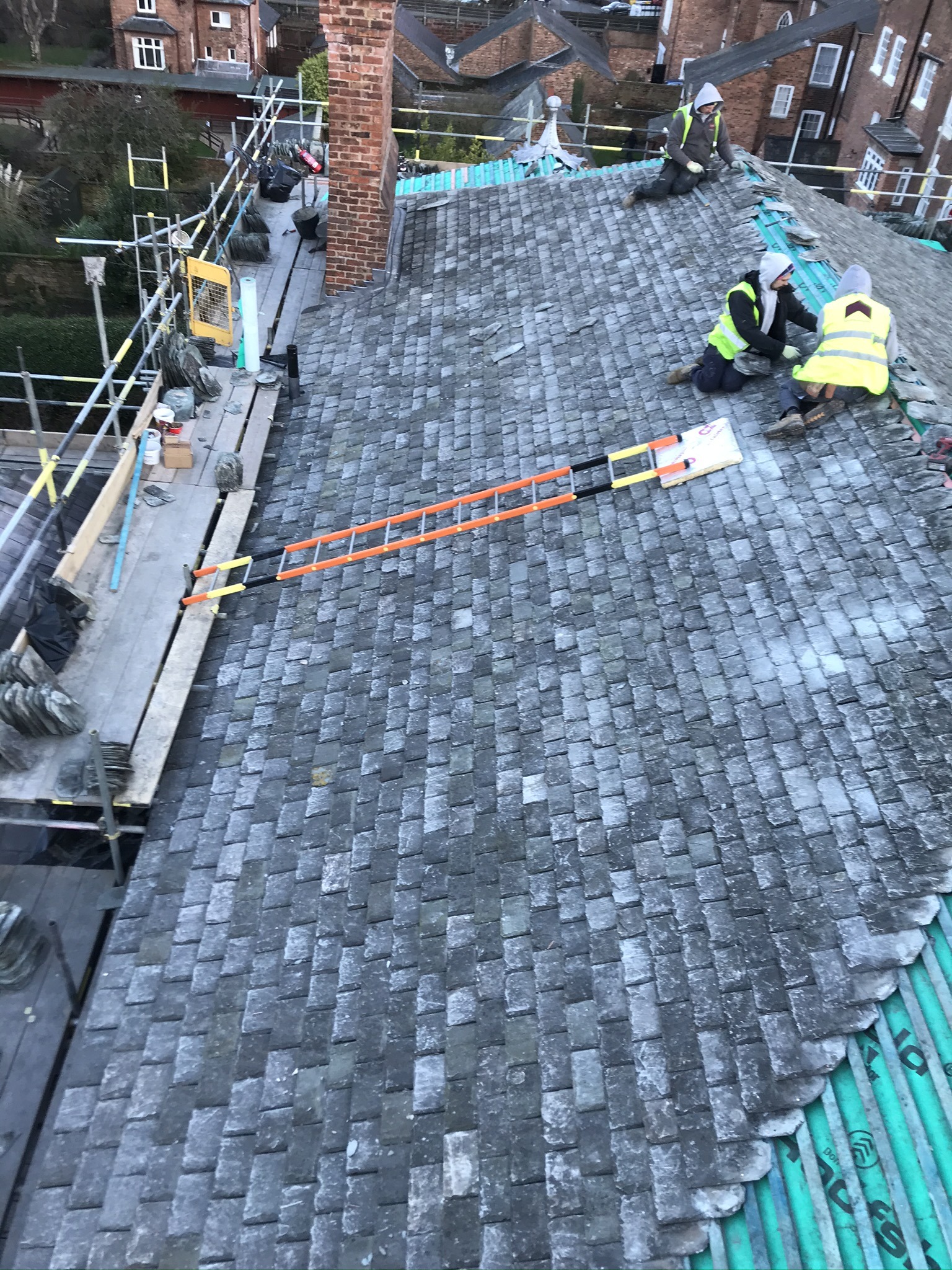
Natural slate roofs may use regular courses, random widths or diminishing courses depending upon the roof, material and regional tradition.
Materials can include Welsh slate, Westmorland Green, Burlington, reclaimed natural slate, stone slate and other suitable regional products. Historic slate may require careful sorting and grading before reuse.
For unusual or scarce coverings, availability should be considered early enough to allow samples and replacement material to be sourced before substantial stripping begins.
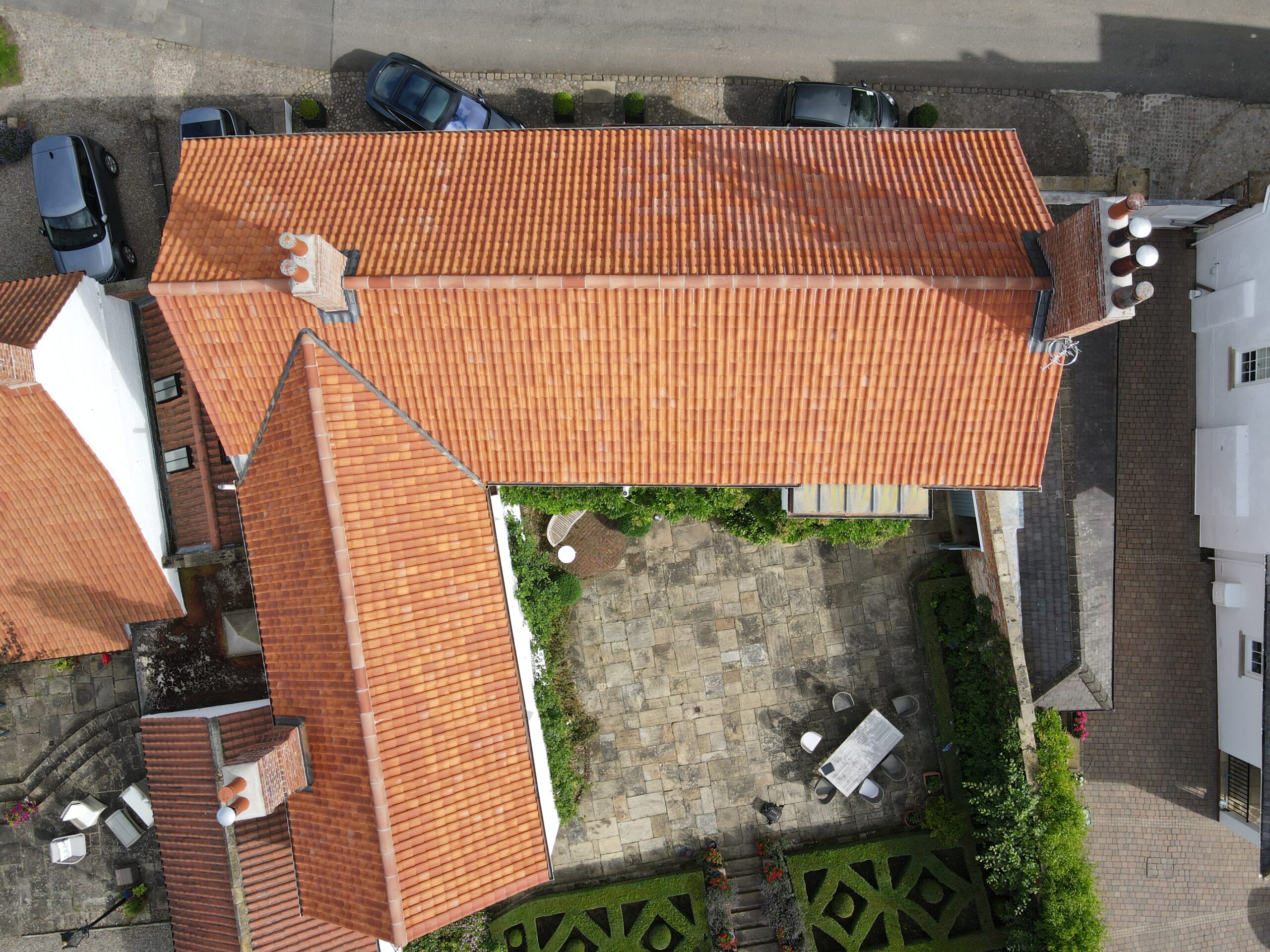
Traditional clay tiles and peg tiles occur on many historic buildings. Repairs may require careful salvage and matching, while complete renewal can involve consideration of colour, camber, texture, dimensions, setting out and the character of the existing roof.
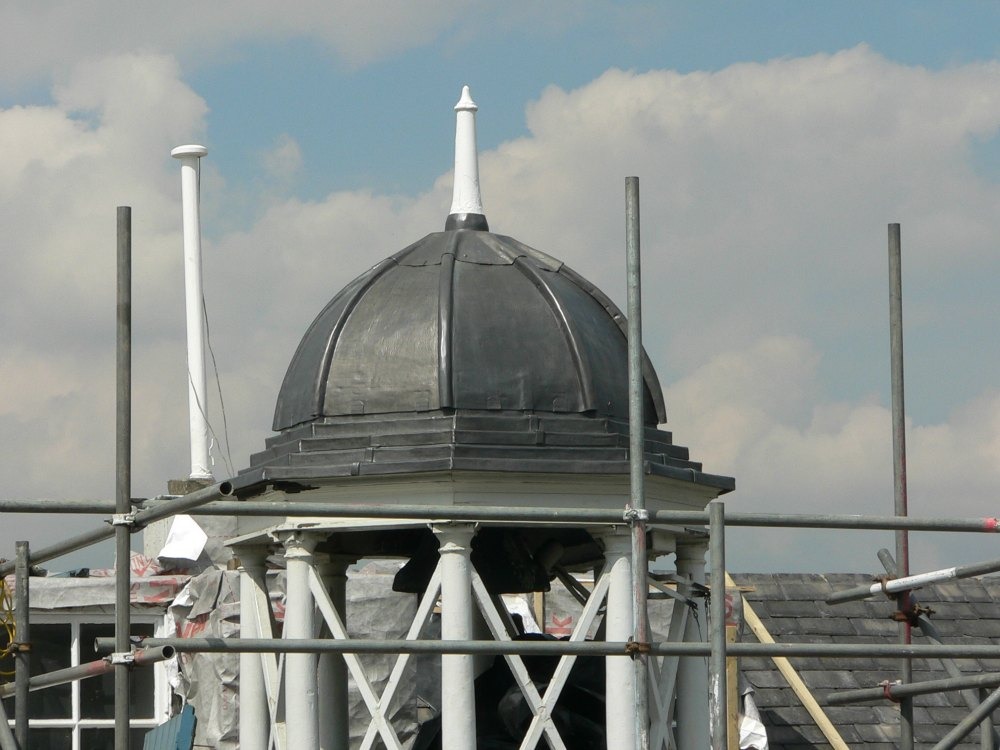
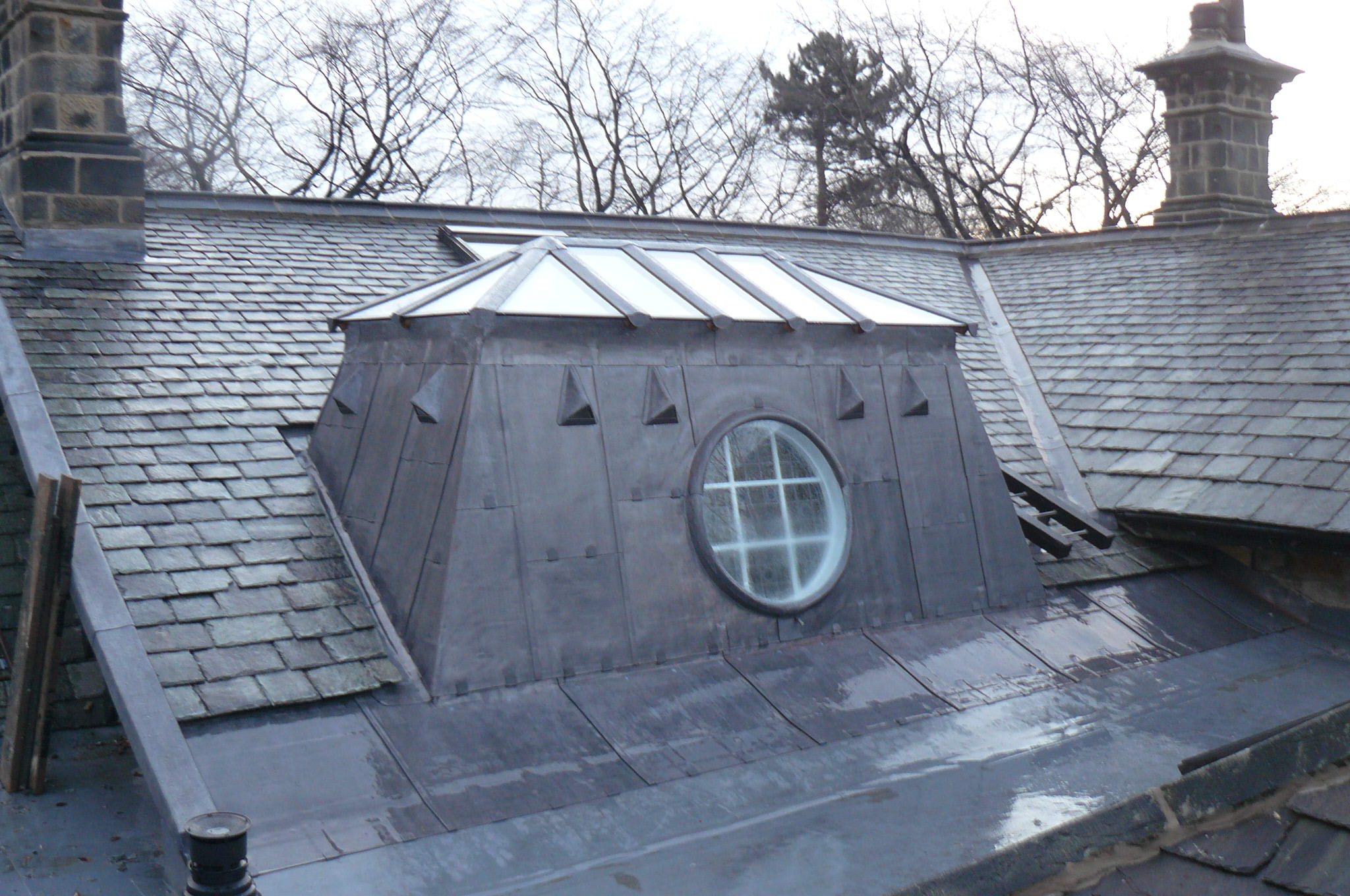
Lead is commonly used for valleys, gutters, roofs, dormers, parapets, abutments, chimneys and complex weathering interfaces.
The lead code, sheet dimensions, laps, fixings, substrate and joint arrangement must accommodate thermal movement and drainage. Lead sheet work should be designed and executed with appropriate regard to BS 6915, BS EN 12588 and relevant practical guidance.
Further specialist information is available through The Lead Lads.
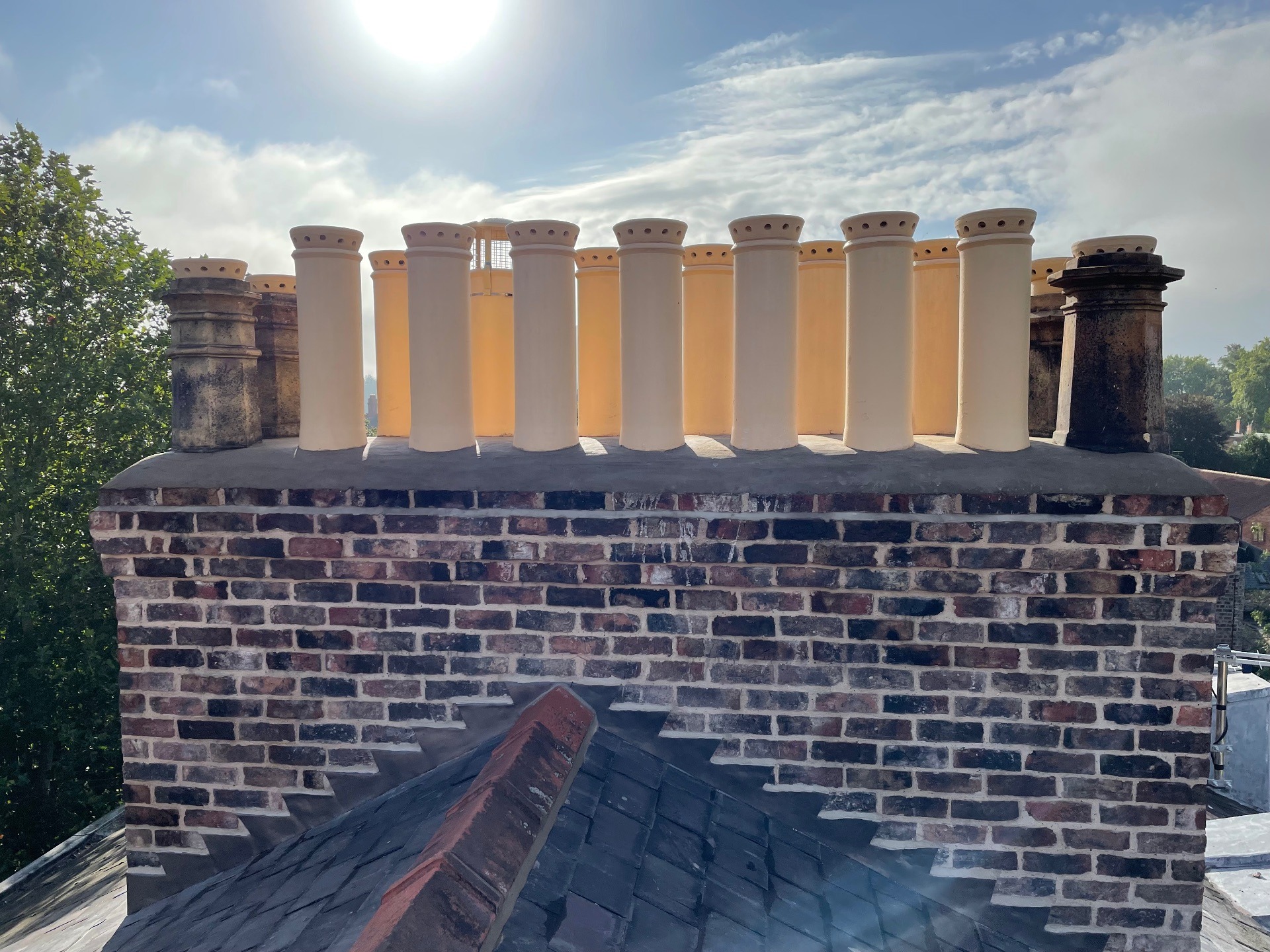
Historic chimneys, parapets, walls and copings may require lime-based mortars rather than hard cement-rich alternatives. Mortar selection should respond to the existing masonry, exposure, condition and original construction.
Historic roofing frequently incorporates timber gutters, moulded fascias, soffits, boarding, rooflights and decorative details. Sound original joinery may be repaired, while defective sections can be reproduced to match existing profiles where appropriate.
Historic rainwater systems may include cast iron, lead, zinc, aluminium or timber gutters. Capacity, outlets, falls, joints and discharge routes should be considered carefully because defective drainage can accelerate decay to masonry, timber and roof interfaces.
Conservation rooflights are generally intended to sit more discreetly within a traditional roof slope. Their dimensions, position, external projection, glazing arrangement and weathering should respond to the character of the existing roof and any applicable consent requirements.
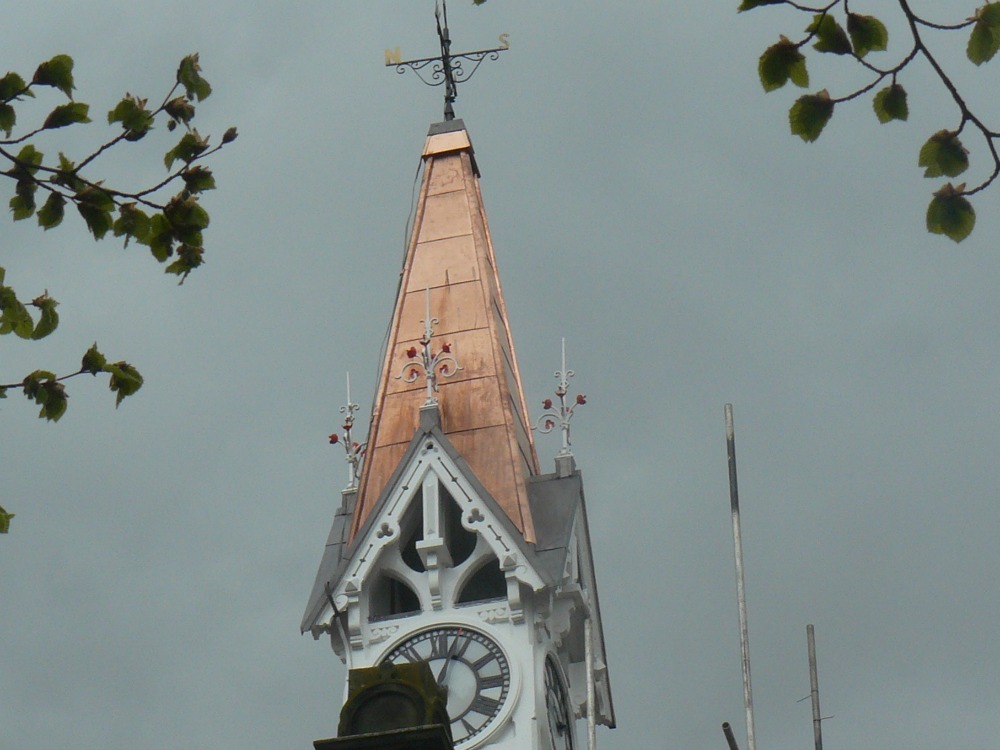
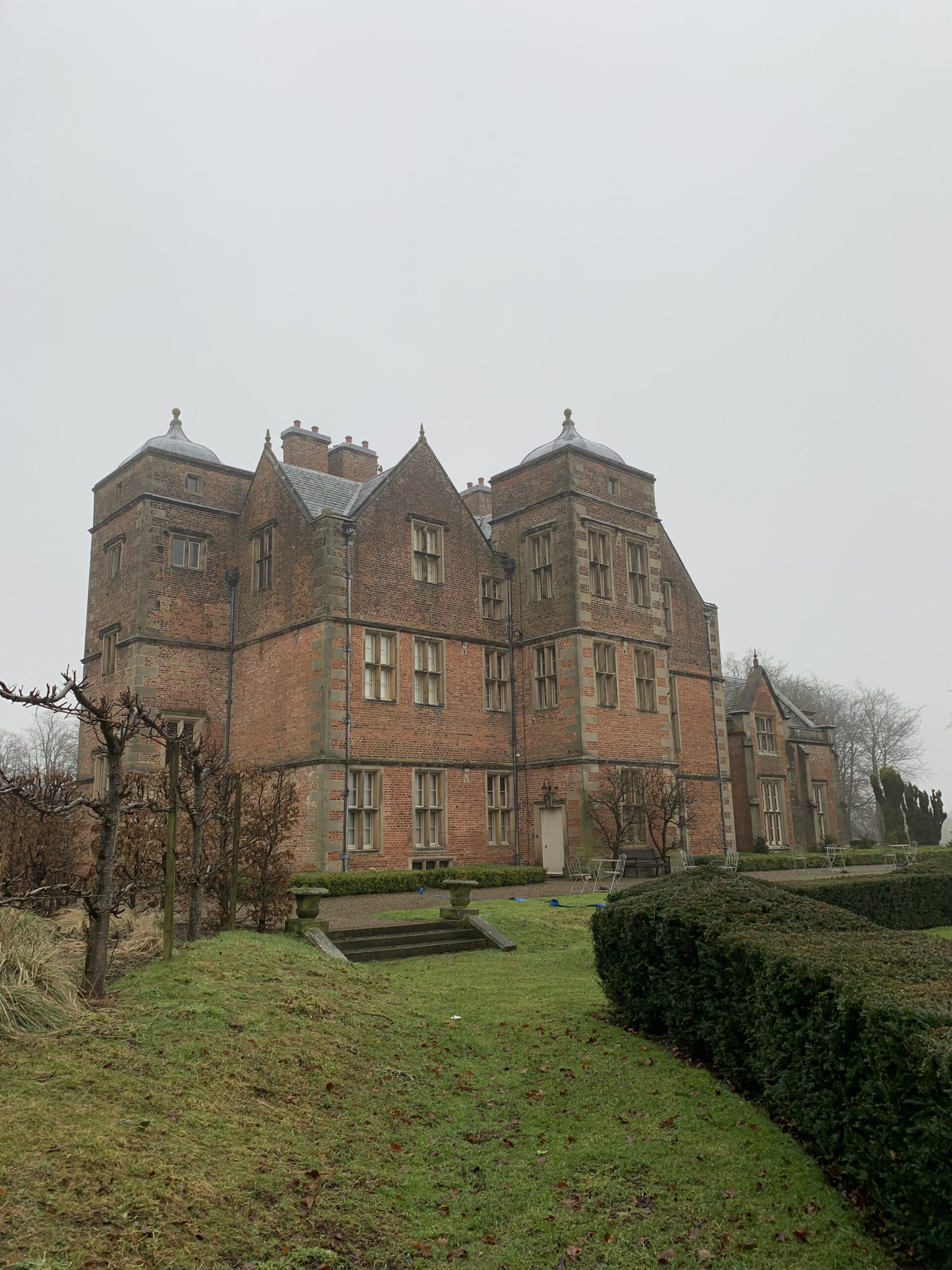
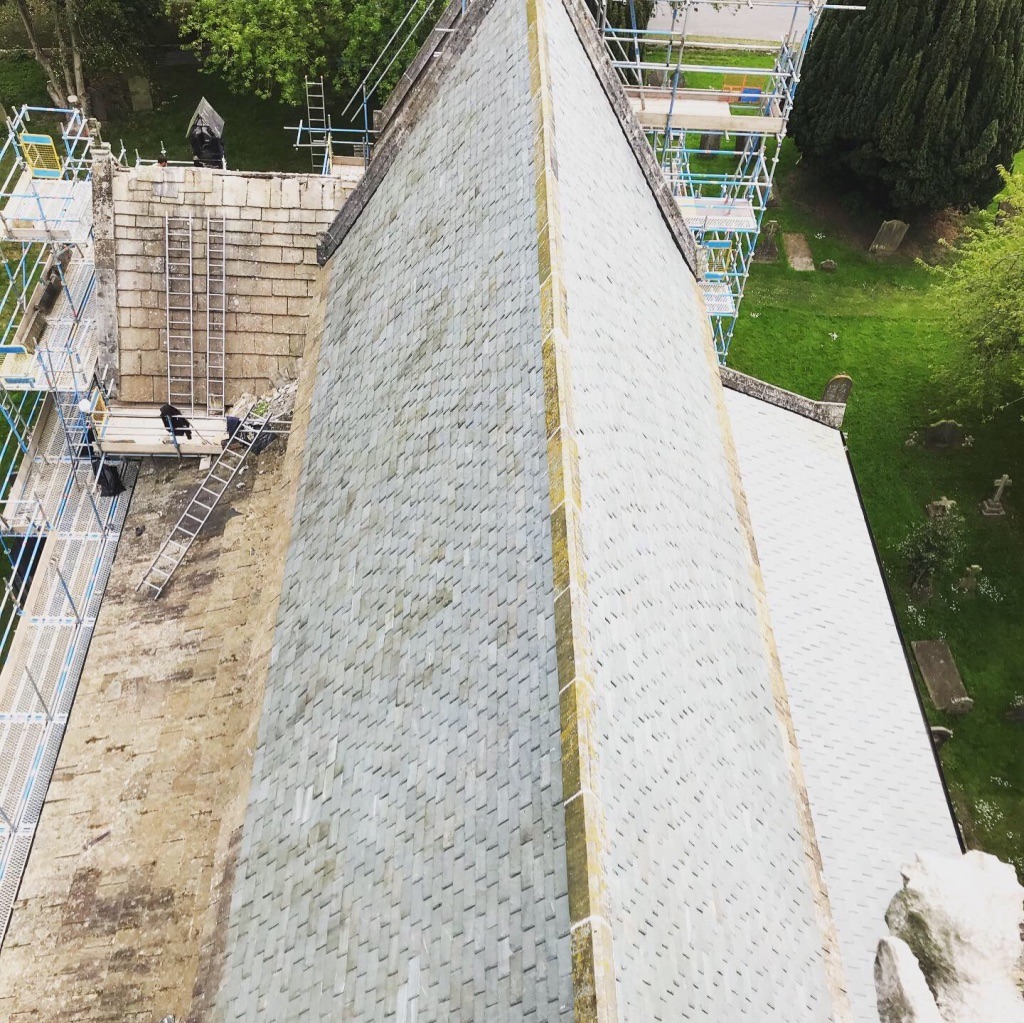
Church re-roofing using traditional roofing materials and conservation-sensitive detailing.
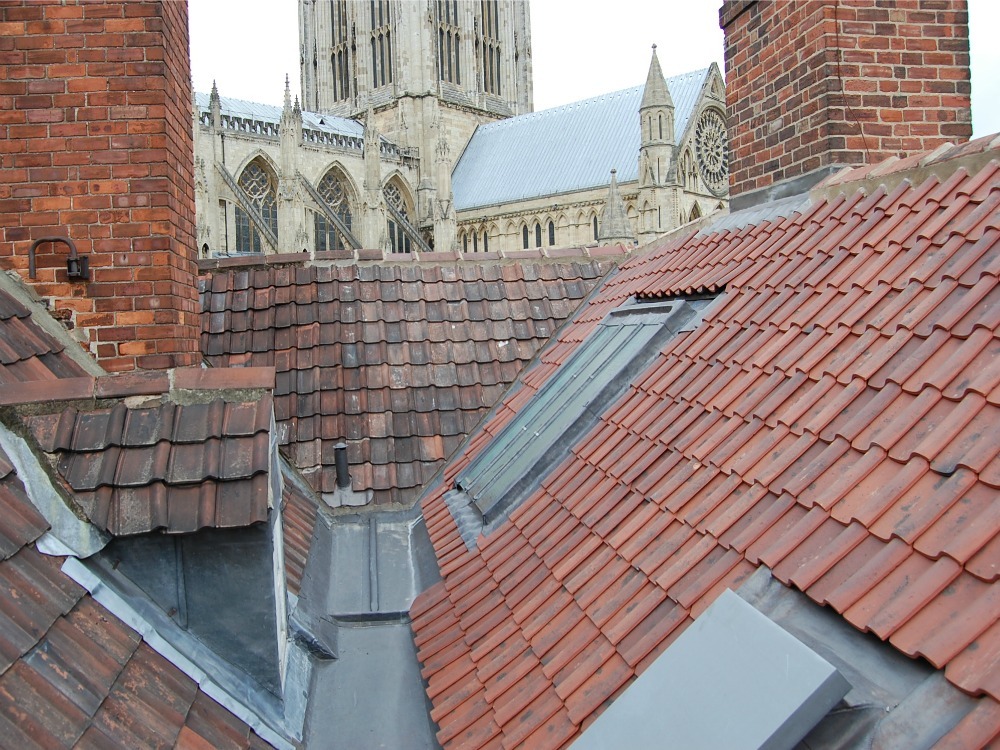
Historic city-centre roofing and leadwork delivered within a constrained urban environment.
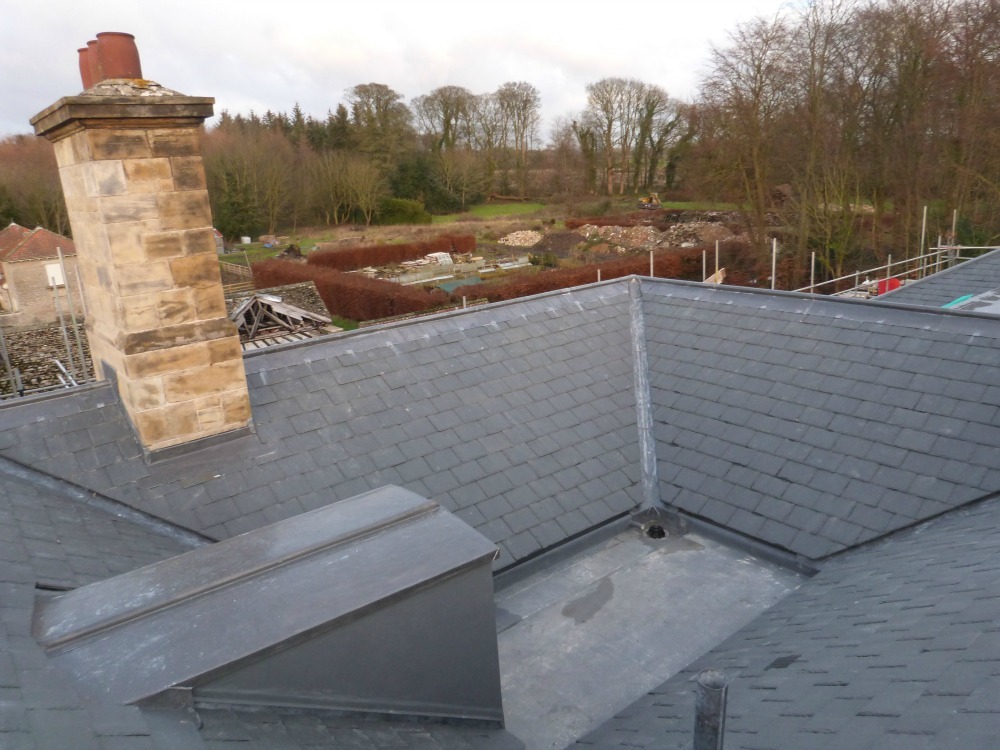
Natural slate roofing selected and installed in response to the building and character of the existing roof.
A heritage project leaves more than a completed roof. Photographs, material records and information uncovered during conservation work can contribute to the continuing record of how an historic building has changed, been repaired and survived.
Through our former GNR Roofing Services identity, project photographs and information relating to selected listed buildings have been contributed through Historic England’s public heritage-record initiatives.
Our dedicated Historic England & Roofing Heritage page connects examples of Neal Roofing’s conservation work with their wider historic context and corresponding heritage records.
It creates a useful bridge between the physical work undertaken by the roofing contractor and the documentary record surrounding the building itself.
Historic England & Roofing HeritageThe archive includes roofing and conservation work associated with historic buildings including:
Project evidence, historic context and a continuing record of conservation work.
Explore the Heritage RecordHistoric character does not remove the need for technical performance. The challenge is to satisfy the requirements of the individual project while avoiding unnecessary loss or inappropriate alteration of significant historic fabric.
Depending upon the project, consideration may be given to:
The applicable requirements should be established for the individual building and scope rather than applying generic replacement details indiscriminately.
Explore Roofing RegulationsNeal Roofing can work alongside architects, conservation officers, building surveyors, structural engineers, estate managers, quantity surveyors, principal contractors and private clients.
Contractor input can include:
Where listed-building consent, planning permission or formal conservation advice is required, the necessary approvals should normally be established before irreversible work begins.
Discuss a Specified ProjectLead remains one of the most important materials in historic roofing. It is used to form gutters, valleys, roofs, dormers, cappings, parapets, flashings, abutments and complex weathering details throughout the historic building stock.
Successful leadwork depends upon considerably more than dressing sheet lead into position. The lead code, sheet dimensions, substrate, fixing arrangement, laps, drips, rolls, drainage and allowance for thermal movement all influence long-term performance.
Neal Roofing undertakes specialist leadwork as part of heritage roofing and wider building-envelope projects.
Additional technical resources, examples and practical guidance can be explored through The Lead Lads.
Accreditations provide useful independent evidence of specialist capability. They sit alongside the more important practical evidence provided by completed work, experienced operatives, technical knowledge and responsible project delivery.

Recognition relating to traditional roofing workmanship and specialist heritage skills.

Recognition associated with technical responsibility and specialist heritage roofing capability.

Geoff Neal (Roofing) Limited is listed with the NFRC in relation to specialist heritage roofing capability.
A major roof replacement should not be the default maintenance strategy for every historic building. Understanding condition and addressing deterioration before widespread failure can help retain historic material and make future expenditure more predictable.
For owners, estates, churches and organisations responsible for significant buildings, a structured Heritage Roof Condition Report can establish a documented baseline for the roof and its associated details.
The findings can then inform immediate repairs, medium-term priorities and an appropriate programme of inspection and maintenance.
Heritage Roof Condition Reports1. Inspect
Understand the roof and identify deterioration.
2. Record
Create photographic and condition information.
3. Prioritise
Separate urgent defects from planned work.
4. Repair
Intervene proportionately where work is required.
5. Monitor
Review condition before minor defects become major failures.
Neal Roofing can inspect historic roofs where the purpose is to understand potential contracting work, develop a practical roofing scope, assess likely repairs or prepare a quotation.
Where a client requires a genuinely independent professional condition report, pre-acquisition assessment, defect investigation or surveying opinion, the surveying appointment should remain independent from the contractor subsequently instructed to undertake remedial work.
Independent building surveying and roof investigation services are available through Strut Building Surveyors.
This separation can be particularly important where advice may be relied upon in connection with acquisition, litigation, insurance, contractor disputes or independent specification.
Planning roofing work?
Neal Roofing can inspect, advise upon practical works and prepare a roofing proposal.
Managing an historic roof?
Consider a Heritage Roof Condition Report and planned maintenance approach.
Need independent professional advice?
A separate surveying appointment may be more appropriate.
Scaffolding and controlled opening-up frequently reveal defects beyond the visible slate or tile covering. Addressing related work during the same project can reduce future access costs and prevent weaknesses being left at critical interfaces.
Associated work can include:
Completed projects provide the clearest evidence of the materials, detailing and practical constraints involved in conservation roofing.
Common questions about repairs, listed buildings, surveys, historic materials and conservation-sensitive roofing projects.
Yes. Many historic roofs can be repaired without complete replacement. Localised work may include natural slate repairs, lead valleys, gutters, chimney flashings, parapets, rainwater goods and timber details.
Complete re-roofing may be appropriate where widespread deterioration makes continued isolated repair impractical or where the roof covering, fixings or supporting construction require more extensive intervention.
Yes. Heritage and conservation-sensitive roofing forms an established part of our work. The proposed scope should respond to the significance of the building, retained historic fabric and any applicable listed-building consent or planning requirements.
Potentially. Original materials may be reused where they remain sound and suitable for continued service.
Natural slate should be assessed for condition, nail holes, thickness, delamination, breakage and suitability for reuse. Where retained quantities are insufficient, historic material may sometimes be supplemented with carefully selected reclaimed or new material.
Yes. Our work includes lead roofs, gutters, valleys, flashings, dormers, parapets, chimney details and other traditional lead weatherings.
Individual details should consider sheet dimensions, lead code, substrate, drainage, fixing arrangements and thermal movement.
Yes. Heritage roofing projects can include chimney repointing, flaunching, local masonry repair, parapet work, copings and appropriate mortar repairs where these form part of the wider roof-envelope project.
Yes. Neal Roofing can work from professional drawings, schedules and specifications and provide practical contractor input concerning materials, access, sequencing, opening-up, leadwork and roofing details.
Yes. We undertake roofing work to churches, chapels and other ecclesiastical buildings, including natural slating, leadwork, rainwater systems, masonry interfaces and planned roofing repairs.
A Heritage Roof Condition Report provides a structured record of the visible condition of an historic roof and associated details. It can help identify defects, establish repair priorities and provide a baseline for planned maintenance.
Further information is available on our Heritage Roof Condition Report page.
Through our former GNR Roofing Services identity, photographs and project information relating to selected listed buildings have been contributed through Historic England public heritage-record initiatives. Our Historic England and Roofing Heritage page brings together examples of this work and its wider historic context.
Yes. Where genuinely independent professional advice is required rather than contractor inspection, a separate surveying appointment may be appropriate. Independent roof surveying services are available through Strut Building Surveyors.
Neal Roofing is based near York and works throughout Yorkshire. Suitable heritage, ecclesiastical, natural-slate and specialist roofing projects may also be considered across the wider North of England.
Send us photographs, drawings, survey reports, listed-building information or a description of the roofing work being considered. We can review the information and advise whether the appropriate next step is preliminary contractor input, a structured site inspection or preparation of a roofing proposal.
Historic buildings deserve roofing solutions developed around the building — not generic replacement details.