


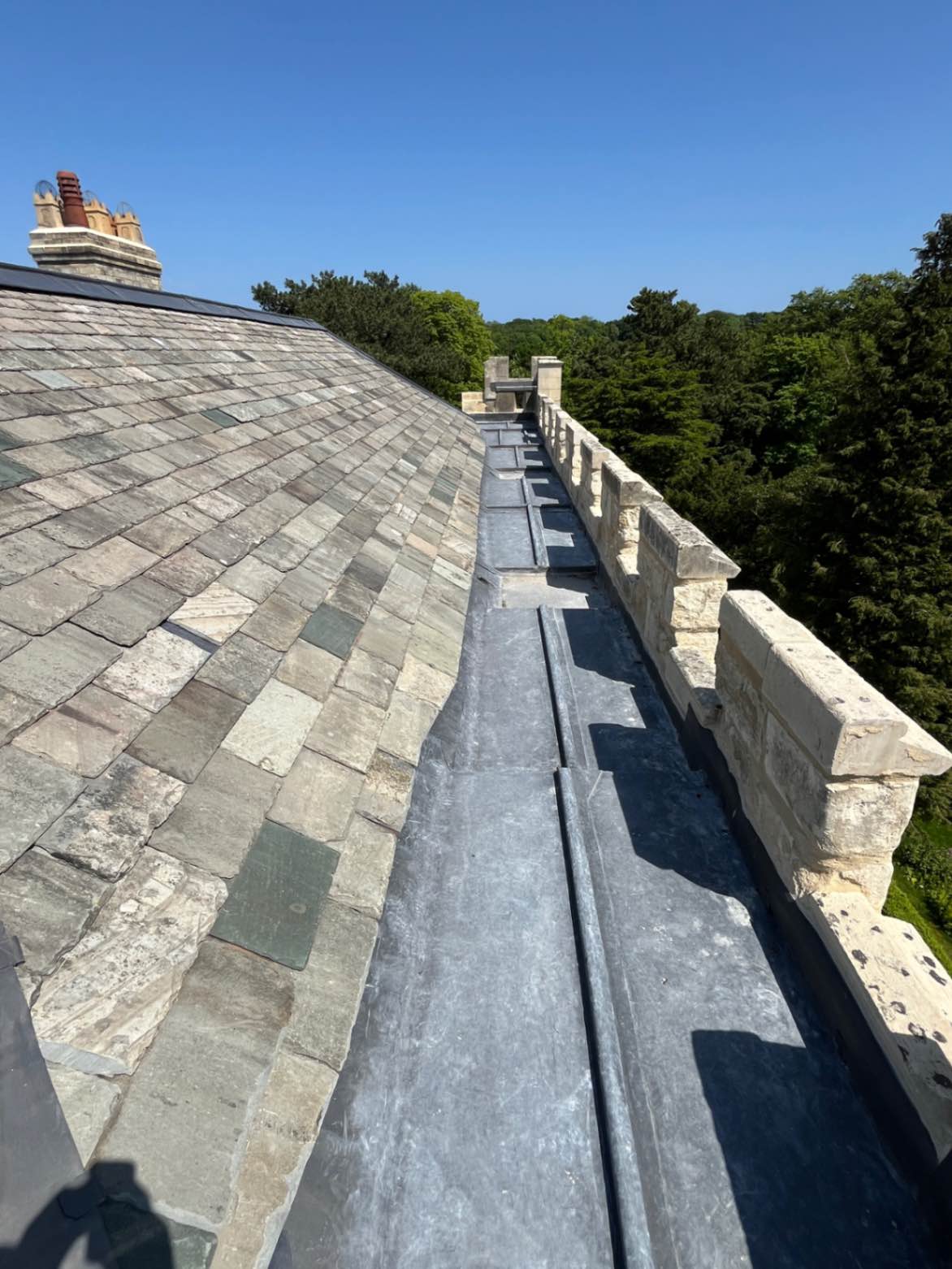
A guide to roofing self-certification, the former CompetentRoofer scheme, NFRC CPS and the Building Regulations requirements that can apply when existing roofs are substantially refurbished.
The terminology has changed over time, but the underlying purpose remains important: allowing suitably assessed roofing businesses to self-certify qualifying work against the Building Regulations without requiring a separate building-control application for that controlled work.
CompetentRoofer was the roofing-specific competent person scheme associated with the National Federation of Roofing Contractors.
The scheme provided a route through which appropriately registered roofing contractors could self-certify eligible refurbishment work as complying with the Building Regulations.
Rather than the property owner separately arranging building-control approval for qualifying work, a registered contractor could undertake the work through the scheme, make the required notification and enable the appropriate compliance certificate to be issued.
The industry terminology has subsequently evolved. NFRC now presents the scheme as the NFRC Competent Person Scheme, commonly abbreviated to NFRC CPS.
Government guidance published in 2026 uses the wider term self-certification scheme and notes that these schemes were previously known as competent person schemes.
Historically
CompetentRoofer
Current NFRC terminology
NFRC Competent Person Scheme
NFRC CPS
Current government terminology
Self-certification scheme
All describe the evolving regulatory framework through which suitably assessed installers can certify specified categories of controlled building work.
Some types of building work are controlled by the Building Regulations. Self-certification schemes provide an alternative compliance route for specified work where the business carrying it out has been assessed and registered for the relevant category.
Where controlled work is not undertaken through an appropriate self-certification scheme, the building owner may need to use the relevant building-control process.
This generally means establishing the applicable requirements before work begins and obtaining the necessary approval, inspection or certification through the appropriate building-control route.
For qualifying work, a registered business can self-certify that its work complies with the relevant Building Regulations.
The scheme provides a structured mechanism for notification and certification without a separate building-control application being required for the work covered by that registration.
Building Regulations compliance can become particularly important when a property is:
Where applicable, the resulting compliance documentation provides evidence that the relevant work was dealt with through an authorised route.
A quotation, invoice or workmanship guarantee is not the same thing as Building Regulations certification.
Substantial refurbishment of an existing roof can bring the work within Building Regulations requirements.
NFRC currently advises homeowners that where refurbishment work affects 50% or more of the roof area, either an appropriately registered NFRC Competent Person Scheme contractor should be used or Building Control should be contacted before work begins.
One of the principal issues is the thermal performance of the roof. Where the relevant threshold is reached, the existing thermal element may need to be upgraded subject to the requirements, exemptions and feasibility provisions of the applicable Building Regulations.
The exact regulatory position depends upon the nature of the work and building. The percentage should therefore not be treated as a substitute for assessing the actual project.
Roofing Regulations GuideMinor isolated repair
Ordinarily very different from substantial roof refurbishment.
Substantial re-roof
Building Regulations considerations may become directly relevant.
50% or more of roof refurbished
NFRC specifically advises that CPS registration or the appropriate Building Control route should be considered.
Important: the applicable route should be established before controlled work begins.
Part L of the Building Regulations deals with the conservation of fuel and power and is therefore important when substantial work is undertaken to existing roof constructions.
A re-roof is not necessarily limited to replacing slate, tile or waterproofing with a visually similar material.
Depending upon the scope, consideration may also need to be given to:
Removing a roof covering can expose an opportunity — and in some circumstances a regulatory requirement — to improve the thermal element beneath it.
This is why the construction should be considered before work begins rather than deciding insulation requirements after the existing roof has already been stripped.
Good roofing practice therefore requires coordination between the proposed covering, thermal build-up, moisture strategy and the Building Regulations route.
British Standards & Regulations BS 5250 Moisture GuidanceSelf-certification is not a blanket approval covering every activity undertaken by a roofing contractor. Registration relates to defined categories of work, and the particular project must fall within the scope of the scheme and the contractor’s registration.
Historically, the authorised CompetentRoofer scheme covered the replacement of roof coverings on pitched and flat roofs, including necessary connected work within the authorised scope.
Roofing disciplines capable of falling within competent-person/self-certification arrangements have included established roof-covering technologies such as:
The existence of a roofing self-certification scheme does not mean that every alteration to a roof automatically falls within it.
Matters requiring separate consideration can include:
The route should therefore be established against the actual proposed work.
The underlying concept of competent-person registration has remained relatively consistent while its terminology, governance and wider competence framework have evolved.
Government’s historic competent-person scheme listings identify CompetentRoofer as an authorised scheme for replacement roof coverings.
This became a familiar term within domestic re-roofing and is why many historic roofing certificates and searches still refer to CompetentRoofer.
NFRC now publicly identifies the scheme as the NFRC Competent Person Scheme, or NFRC CPS.
The underlying purpose continues to include allowing registered roofing businesses to self-certify qualifying refurbishment work against Building Regulations.
Government guidance published in July 2026 uses self-certification scheme as the current umbrella terminology, noting that these were previously known as competent person schemes.
The change reflects a broader evolution in how competence is defined and assessed across construction.
In July 2026, government published a new Mandatory Technical Competence framework for self-certification schemes.
The framework establishes the competence requirements against which individuals and organisations undertaking regulated work through these schemes are assessed.
Importantly, the requirements are task-based. Competence is not intended to be demonstrated merely by belonging to an organisation or holding a generic title.
The framework considers the knowledge, skills and behaviours required to carry out and certify particular categories of controlled work.
Roofing is specifically included within the 2026 Mandatory Technical Competence framework.
The move towards Mandatory Technical Competence reflects a wider change across the construction industry.
The question is increasingly not simply whether an organisation belongs to a scheme, but whether the individuals and organisation carrying out defined work can demonstrate the competence needed for that work.
That distinction is particularly important in roofing because apparently simple replacement work can interact with:
A contractor may be highly competent in one roofing discipline but not necessarily have the same expertise in another.
For example, slating and tiling, fully supported leadwork, single-ply roofing and liquid waterproofing require overlapping but distinct knowledge and installation skills.
Clients and specifiers should therefore consider the contractor’s experience and competence in the actual roof system proposed rather than relying on a single badge in isolation.
Certification is important, but it sits within a wider evidence base of competence, specification, workmanship and project control.
The NFRC operates as the roofing industry’s trade federation, while NFRC CPS provides a specific Building Regulations self-certification function.
The two are related within the wider NFRC environment, but they should not be treated as interchangeable.
A contractor being an NFRC Trade Member does not, by itself, mean that every project undertaken by that business can automatically be self-certified through NFRC CPS.
For a particular project, the relevant questions include:
Trade federation and membership organisation representing roofing contractors and the wider roofing industry.
The competent-person / self-certification route through which registered roofing businesses can certify eligible roof-refurbishment work.
Always establish the actual certification route for the particular project.
Where eligible work is correctly undertaken and certified through the relevant scheme, the property owner should receive evidence of Building Regulations compliance through the scheme process.
Government guidance says registered installers notify the local authority where required and provide the customer with a certificate following completion.
That certificate can become important documentation within the property’s records and may subsequently be identified during conveyancing searches.
The certificate should be retained alongside other property documentation including:
These documents perform different functions and one should not be assumed to replace another.
Building Regulations should be considered during project planning rather than dealt with retrospectively after a roof has been completed.
For substantial roof refurbishment, our project review considers the proposed covering alongside matters such as the existing construction, insulation, ventilation, moisture management and regulatory requirements.
Depending upon the work, the appropriate route may involve self-certification through an applicable scheme or a separate Building Control process.
Where other permissions or professional input are required, these should be identified independently of the roofing self-certification process.
Arrange a Roofing Survey Client InformationThe NFRC Competent Person Scheme forms one part of the wider regulatory framework affecting roofing work. The following Neal Roofing guides explain related requirements and technical standards.
Our main guide to Building Regulations and regulatory considerations affecting roofing projects.
Roofing RegulationsExplore the principal British Standards relevant to roof coverings, leadwork, flat roofing and moisture management.
British StandardsTechnical guidance relating to moisture management and condensation risk within buildings and roof constructions.
BS 5250 GuideCommon questions about roofing self-certification, Building Regulations certificates and the current NFRC Competent Person Scheme.
The scheme is now generally presented publicly by NFRC as the NFRC Competent Person Scheme or NFRC CPS. CompetentRoofer remains an important historic name and may appear on older certificates, documents and government information.
NFRC CPS is the roofing competent-person/self-certification scheme within the wider NFRC environment. Registered businesses can use it to self-certify eligible roof-refurbishment work against the Building Regulations where the work and registration fall within the scheme scope.
A self-certification scheme allows registered businesses and individuals to certify specified categories of regulated building work as compliant with Building Regulations without the client making a separate Building Control application for that covered work.
NFRC currently advises that where refurbishment affects 50% or more of a roof area, either an appropriately registered NFRC CPS contractor should be used or the relevant Building Control route should be established before work begins.
The project’s thermal performance and Part L requirements may also need to be considered.
No. These figures can relate to different regulatory tests and should not be treated as interchangeable.
The relevant requirement depends upon what is being renovated and how the Building Regulations define the thermal element or wider building envelope. The actual project should therefore be assessed rather than applying a percentage in isolation.
No. NFRC Trade Membership and registration with the NFRC Competent Person Scheme serve different purposes.
A contractor’s ability to self-certify a particular project depends upon its relevant scheme registration and whether the work falls within the authorised scope.
Where qualifying work is properly completed and notified through the appropriate self-certification scheme, certification should be provided through the scheme process. This provides evidence that the relevant controlled work was dealt with through an authorised compliance route.
No. A workmanship guarantee, manufacturer warranty and Building Regulations compliance certificate are different documents serving different purposes.
Where controlled work has already been completed without the appropriate compliance route, the position can be more complicated. The property owner should obtain advice from the relevant Building Control body or an appropriately qualified professional about the available route rather than assuming a contractor can simply issue a retrospective certificate.
Building Regulations and heritage controls are separate regimes. A listed building may require Listed Building Consent or other conservation approvals in addition to any Building Regulations requirements.
The effect of thermal-upgrade requirements can also need careful consideration where historic fabric or architectural significance constrains the available solution.
Government published a new Mandatory Technical Competence framework for self-certification schemes in July 2026. It establishes task-based competence requirements for individuals and organisations and specifically includes roofing within its scope.
Building Regulations and scheme requirements evolve. For projects where certification is important, current requirements should be checked against the relevant official sources and the actual scope of work.
This guide explains the roofing context but should not be treated as a substitute for project-specific Building Control, legal or professional advice.
[/col]Roofing compliance is not simply a certificate issued at the end of a project. It begins with understanding the existing construction, defining the correct scope and establishing the regulatory route before work begins.
The Building Regulations route, insulation strategy and roof specification should be considered before substantial refurbishment work begins.
Send us photographs, drawings or details of the existing roof and proposed work and we can consider the project as part of our initial survey process.

