


Technical guidance on roofing membranes, breathable roof underlays and moisture control within pitched roofs. Including Proctor Air®, slate and tile applications, condensation risk, roof ventilation and conservation considerations.
Proctor Air® is an air- and vapour-permeable roofing underlay manufactured by the A. Proctor Group for use within suitable pitched roof constructions.
Neal Roofing regularly uses Proctor roofing membranes where their performance characteristics suit the particular roof design.
Unlike a conventional airtightness membrane, Proctor Air allows both air movement and moisture vapour to pass through the underlay while providing resistance to external water penetration.
This combination can assist with condensation control within properly designed pitched roofs, particularly where the roof build-up has been considered as a complete system rather than relying upon one component in isolation.
The membrane should always be selected according to the roof construction, exposure, covering, insulation arrangement and moisture strategy.
Shop Proctor Air Proctor Air Technical Information
A pitched roof underlay sits beneath the primary slate, tile or metal roof covering and forms part of the secondary weathering and moisture-management strategy.
Secondary weather protection.
The primary roof covering provides the principal defence against rain, but an appropriate underlay can help manage water, snow or dust that penetrates beneath the outer covering.
Moisture management.
A vapour-permeable underlay allows water vapour within the roof construction to disperse towards the external environment, subject to the design of the complete roof.
Wind pressure.
Roof underlays are exposed to wind pressure and suction beneath slates and tiles. Product selection and installation should therefore account for wind-uplift requirements.
Temporary exposure.
Membranes may provide limited temporary weather protection during construction, but they should not be treated as a permanent exposed roof covering.
Protection of the structure.
Correct moisture management helps reduce the likelihood of persistent condensation affecting insulation, timber and other concealed roof components.
Part of a system.
The membrane must work alongside insulation, ventilation or air permeability, vapour control, battens, roof coverings and internal conditions.
The terms used to describe roofing membranes are often confused, but they do not necessarily mean the same thing.
A vapour-permeable membrane allows moisture vapour to move through the material by diffusion.
An air-permeable membrane additionally permits air movement through the membrane itself.
“Breathable membrane” is commonly used as a broad industry term for low-resistance roof underlays, but it does not fully describe the precise performance characteristics of an individual product.
Accordingly, Neal Roofing considers the actual declared product properties rather than relying solely upon marketing terminology.
Proctor Air is unusual in being both:
The manufacturer currently declares:
These properties help explain why it can be incorporated within a range of pitched roof constructions when designed in accordance with the manufacturer’s certified applications.
View Product DataCondensation control is a property of the complete roof construction, not simply the membrane.
Water vapour is produced continuously within occupied buildings through cooking, washing, bathing, drying clothes and normal occupancy.
If warm moisture-laden air reaches colder parts of the roof construction, the temperature may fall below the dew point and water can condense within concealed layers.
Persistent condensation can contribute to:
A successful moisture strategy may therefore involve consideration of:
BS 5250 provides important guidance relating to the management of moisture in buildings and should be considered alongside product-specific requirements.
Roofing StandardsWhere appropriate to the roof design, Proctor Air provides a combination of properties that make it particularly useful for modern pitched roofing work.
Air movement through the membrane can provide a more distributed route for moisture removal compared with relying solely upon discrete ventilation openings.
The low vapour resistance allows moisture vapour to pass through the membrane rather than becoming trapped beneath the underlay.
The membrane is classified for resistance to water penetration and provides an appropriate secondary barrier beneath the primary roof covering when correctly installed.
The product is certified for appropriate use within pitched roof constructions subject to BS 5534 wind-uplift considerations and the specified fixing arrangement.
Air permeability can be particularly useful on roof arrangements where providing conventional ventilation paths to every part of the roof space would otherwise be difficult.
Proctor Air currently carries BBA certification covering defined warm, cold, ventilated and non-ventilated pitched roof applications.

Roofing membranes form part of the complete slate roof construction alongside graded battens, copper fixings and the selected natural slate covering.

Low-resistance roof underlays can be incorporated beneath clay and concrete roof tiles where compatible with the roof design and manufacturer’s requirements.
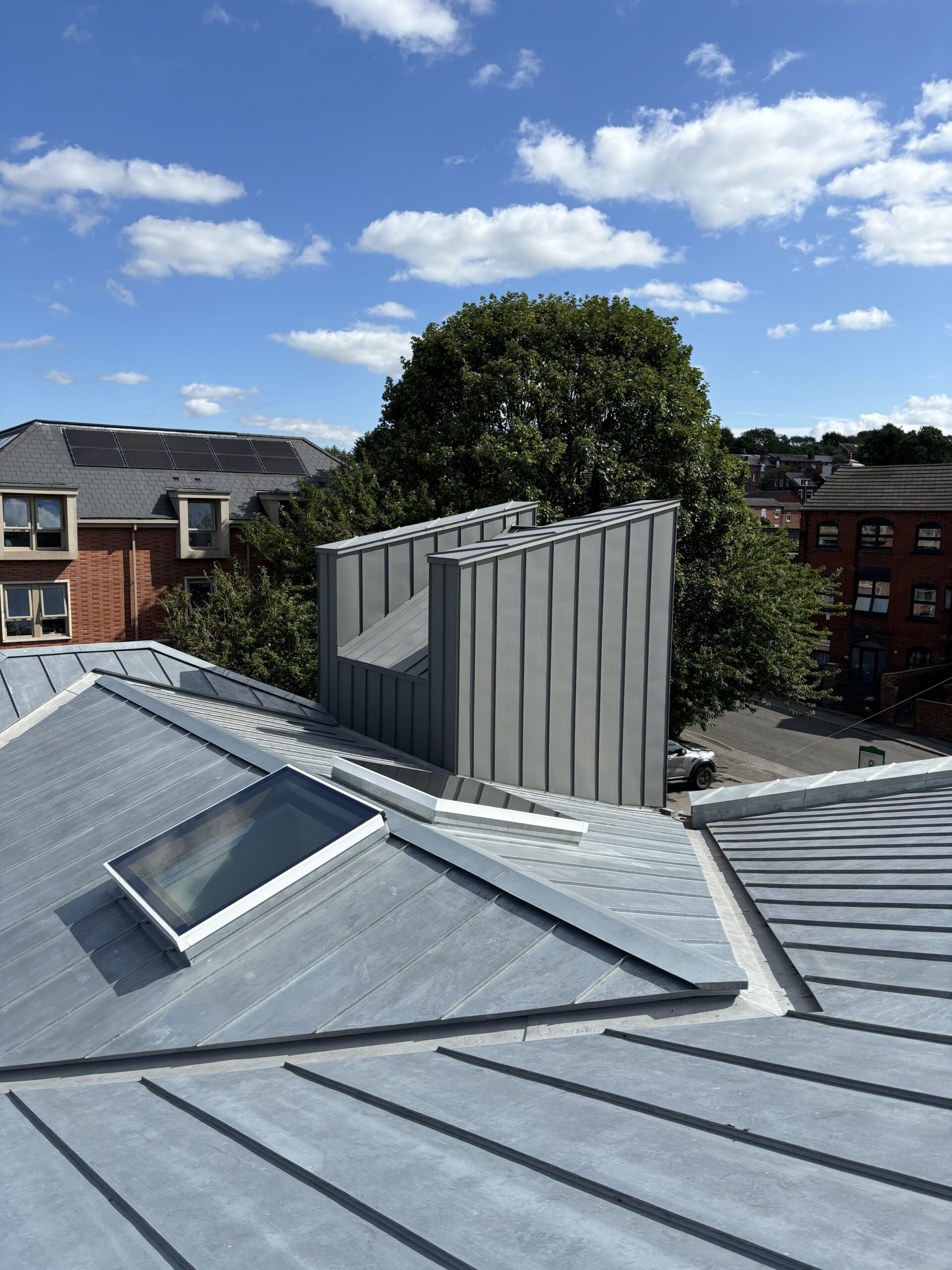
Membrane requirements beneath zinc and other hard-metal roofing systems are highly dependent upon the complete roof build-up and should be considered as part of the system specification.
A natural slate roof consists of more than the visible slate covering.
A typical modern pitched slate roof may incorporate:
Each component needs to be compatible with the others. Changing the underlay can alter the moisture and ventilation strategy of the whole roof.

Even a high-performance roofing membrane should not be regarded as a substitute for properly installed slate or tile.
The principal weathering performance remains dependent upon the external roof covering, correct headlap, roof pitch, detailing and associated flashings.
Roof underlay selection should reflect the position of the insulation and the way moisture is intended to move through the construction.
In a cold pitched roof, insulation is normally positioned at ceiling level, leaving a colder roof void above.
Moisture control within this void must be considered carefully because warm internal air can reach cold roof components.
Depending upon the certified roof arrangement, an air- and vapour-permeable underlay can form part of the strategy for reducing condensation risk.
In a warm pitched roof, insulation generally follows the roof slope, bringing more of the roof structure within the insulated envelope.
The position of insulation, internal vapour resistance, membrane permeability and external ventilation or air movement should all be coordinated.
Manufacturer-certified build-ups should be followed rather than assuming one membrane arrangement is appropriate for every roof.
Roof underlays are subject to wind pressure passing through gaps between tiles or slates. This can cause the membrane to deflect or “balloon” beneath the covering.
Excessive deflection can:
Membrane specification, laps, restraint and installation should therefore take account of the roof’s wind exposure and relevant BS 5534 requirements.
Wind-uplift resistance is affected by:
Modern roofing membranes require particular care where bats are present or where a roof forms part of a known bat roost.
Bat Conservation Trust guidance identifies an entanglement risk associated with many non-bitumen-coated roofing membranes manufactured from spun-bond polypropylene or polyethylene filaments.
Bat claws can pull fibres from the surface of certain membranes. These fibres may then form loose strands capable of entangling bats.
The presence of bats can also influence the way roofing membranes perform because oils, dust and bat droppings may affect the membrane surface over time.
For this reason, a membrane that performs well on a conventional roof should not automatically be assumed suitable for a roof containing a bat roost.
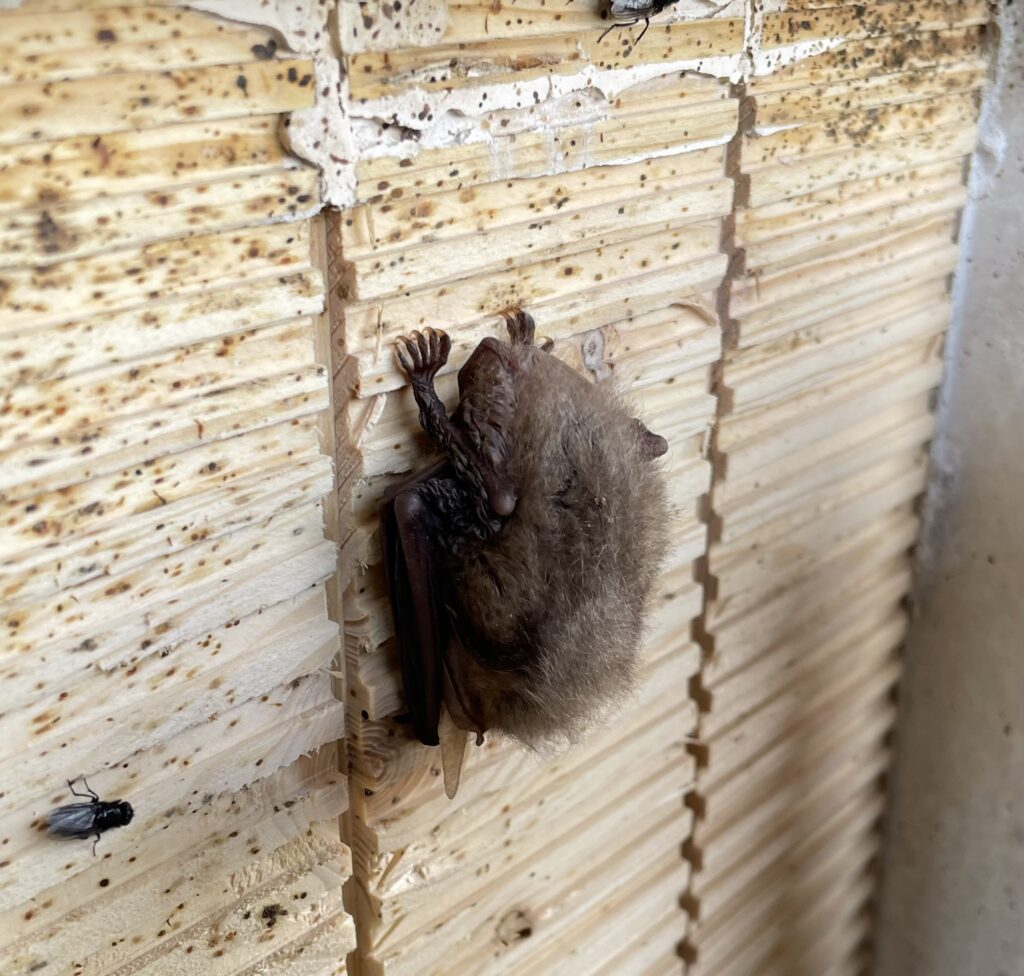
Current Bat Conservation Trust guidance states that where roofing felt is installed in a roof used by bats, bituminous roofing felt without polypropylene or polyethylene filaments should generally be used.
A traditional hessian-reinforced Type 1F bituminous felt is given as an example.
Sarking boards may also form part of an alternative approach in suitable circumstances.
Where bats are known or suspected to be present, ecological advice and any required licensing or mitigation measures should be established before roofing work proceeds.
Bat Conservation Trust GuidanceWhere bats are present, the normal advantages of a modern low-resistance roof membrane do not override wildlife considerations.
Current guidance therefore requires a different approach from a conventional domestic or commercial roof.
This is particularly relevant on:
No roofing membrane should be selected simply because it is the product a contractor normally keeps in stock.
The membrane should be appropriate for the slate, tile, metal or other covering above it.
The position of insulation and the warm or cold roof arrangement influence moisture behaviour.
Wind exposure and local weather conditions influence membrane restraint and wind-uplift requirements.
Complex valleys, dormers, rooflights and intersecting slopes can make conventional ventilation arrangements more difficult.
Buildings with high internal humidity require different consideration from lightly occupied or unheated spaces.
Listed buildings, traditional roof structures and bat roosts may require alternative materials or detailing.
The proposed build-up should fall within the certified and manufacturer-supported use of the selected product.
Underlay should be coordinated with eaves, valleys, abutments, penetrations, rooflights and ventilation components.
Proctor Air is one example of a high-performance pitched roof underlay used by Neal Roofing where appropriate to the project.
According to current manufacturer literature, the product provides:
Product data and certification can change. The current manufacturer’s literature should always be checked at specification stage.
Proctor Air Product PageOur approach is to specify the underlay in the context of the complete roof rather than treat it as a generic roll of roofing felt.
Neal Roofing works across traditional slate, tile, lead, metal and heritage roof construction throughout Yorkshire.
This allows us to consider how the underlay interacts with:
Proctor Air is frequently useful, but the correct material is ultimately the one that suits the building and its roof construction.
Our Roofing Services

Neal Roofing uses roofing underlays as part of live contracting work. Proctor Air and other roofing materials can also be sourced separately through The Reclaimed Company.
Before purchasing for a specific roof, confirm that the product is suitable for the proposed roof construction and application.
A roofing membrane or roof underlay is a layer installed beneath the primary slate, tile or other roof covering. It forms part of the secondary weathering and moisture-management system of the roof.
The term generally refers to a low-resistance underlay that allows water vapour to pass through the material. Some products, including Proctor Air, additionally allow air movement through the membrane.
No. Proctor Air is specifically designed to be both air permeable and vapour permeable. This differentiates it from airtightness membranes and vapour-control layers used elsewhere within a building envelope.
Yes, Proctor Air has certified pitched roof applications that include slate roof constructions, subject to the actual roof build-up and manufacturer’s requirements.
No membrane should be considered an absolute guarantee against condensation. Condensation risk depends upon the complete roof construction, internal humidity, insulation, ventilation or air permeability, vapour control and workmanship.
This depends upon the product and roof construction. Some low-resistance and air-permeable systems are certified for defined non-ventilated roof arrangements, while other constructions require ventilation. The manufacturer’s certified details and BS 5250 guidance should be followed.
Current Bat Conservation Trust guidance advises against installing conventional non-bitumen-coated roofing membranes within roofs used by bats. Traditional bituminous felt without polypropylene or polyethylene filaments, such as hessian-reinforced Type 1F felt, is given as a suitable approach, subject to project-specific ecological advice.
Only for the limited period permitted by the individual manufacturer and subject to weather conditions. A roofing underlay is not intended to function as the permanent external roof covering.
Slate, tiles and leadwork are the visible parts of a roof, but its long-term performance also depends upon the underlay, battens, fixings, insulation and moisture strategy beneath them.

