


Interstitial Condensation in Zinc Roofs
Causes, risks and prevention in low-pitch zinc roof construction, with particular consideration of vapour control, airtightness, construction sequencing and the design–performance gap.
What causes interstitial condensation in zinc roofs?
Zinc roof condensation is usually a building-envelope problem, not simply a roofing-material problem.
Interstitial condensation occurs when moisture accumulates within the layers of a roof rather than appearing only as visible surface condensation.
Low-pitch zinc roofs can have relatively little tolerance for discontinuity in vapour control, airtightness, insulation and construction sequencing because the external metal covering provides virtually no moisture buffering and completed assemblies may have restricted drying potential.
Interfaces matter more than uninterrupted roof areas
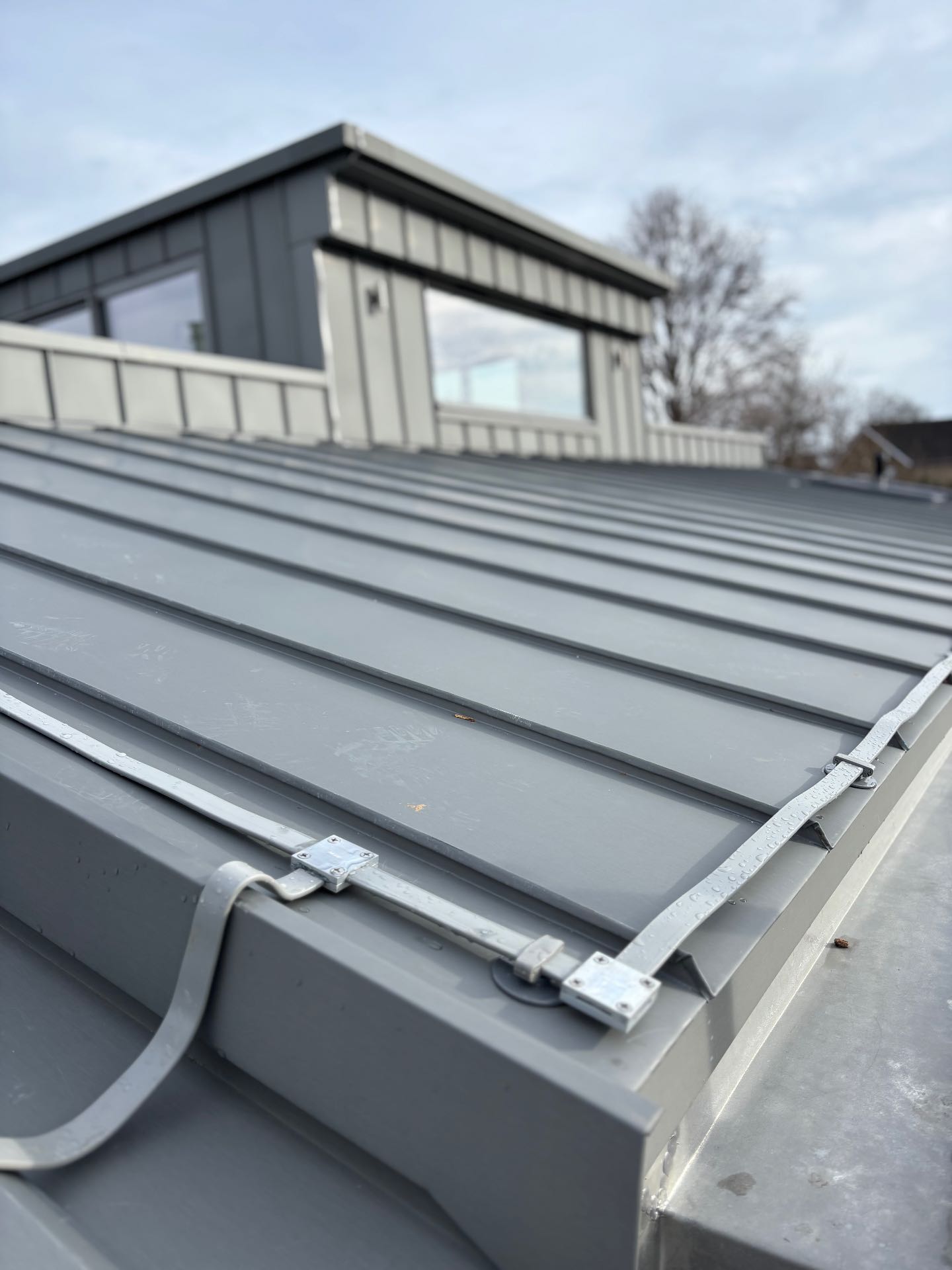
Practice-led investigation repeatedly identified rooflights, parapets, eaves and service penetrations as high-risk locations where continuity of vapour, air and thermal control can be lost.

What is interstitial condensation?
Interstitial condensation is moisture that forms within the construction of a building element rather than solely on a visible surface.
Warm internal air contains water vapour. As air or vapour moves toward colder parts of a roof construction, its temperature may reduce. Where conditions reach the dew point, water can condense within insulation, on timber components, against membranes or beneath the external roof covering.
Moisture movement is not limited to vapour diffusion. Air leakage through gaps and discontinuities can transport substantial quantities of moisture into roof assemblies.
The complete assembly matters
A roof can contain appropriate individual products yet still perform poorly if thermal, air and vapour-control layers are not continuous through the interfaces between them.
Why are low-pitch zinc roofs sensitive to moisture?
No hygroscopic buffering
Zinc cannot absorb and redistribute moisture in the way some building materials can.
Highly conductive
Metal responds quickly to external temperatures and can create relatively cold interfaces.
Restricted drying
Once enclosed, highly insulated metal roof assemblies can have limited inward and outward drying potential.
Low-pitch detailing
Shallow roof geometry increases the importance of drainage, interfaces and precise detailing.
How moisture risk develops
Moisture failures are rarely attributable to one isolated factor. Risk accumulates through design, specification, construction and use.

A VCL is only effective if it remains continuous
Simply including a vapour control layer within a drawing or specification does not ensure that the completed roof will perform as intended.
Its effectiveness depends on position, resistance, durability and, critically, continuity across the roof.
Particular attention is required at walls, rooflights, parapets, eaves, structural elements, ducts, cables, flues and other penetrations.
The drawing is not the finished roof
A VCL shown as a continuous line in a construction detail may become fragmented during installation. Performance is determined by the completed as-built layer.

Where are condensation risks greatest?
Interfaces rather than uninterrupted roof areas are often the points where the moisture-control strategy becomes most vulnerable.
Rooflights, parapets, eaves, upstands, wall junctions and service penetrations require the insulation, air-control and vapour-control layers to continue through changes in geometry.
These are also locations where multiple trades may interact with the same construction, increasing the importance of coordinated detailing and inspection before the work becomes concealed.
Rooflights
Kerbs interrupt insulation, vapour control and sometimes structural decks.
Parapets
Changes of plane create difficult VCL terminations and potential thermal bridges.
Eaves & soffits
Roof, wall and ceiling layers must connect while maintaining thermal and vapour continuity.
Service penetrations
Flues, ducts, cables and later alterations can compromise otherwise continuous control layers.
Practice-led building-pathology research
This article draws upon MSc Surveying research undertaken by Oliver Neal into interstitial condensation risk in low-pitch zinc roofing in UK residential construction.
Evidence was triangulated between practitioner experience, forensic case studies, specification review and physical investigation rather than relying upon one calculation or isolated defect.
Moisture risk can begin before occupation
Moisture can become incorporated into a roof during construction and remain trapped after the zinc covering is installed.
Wet substrates
Timber decks may become wet before enclosure and subsequently have restricted drying routes.
Late penetrations
Services introduced after the VCL has been completed can compromise continuity.
Temporary exposure
Insulation and membranes can be exposed to rainfall before the roof becomes weather-tight.
Premature closure
Closing the assembly before materials have dried can conceal moisture from the outset.
Condensation or leaking zinc roof?
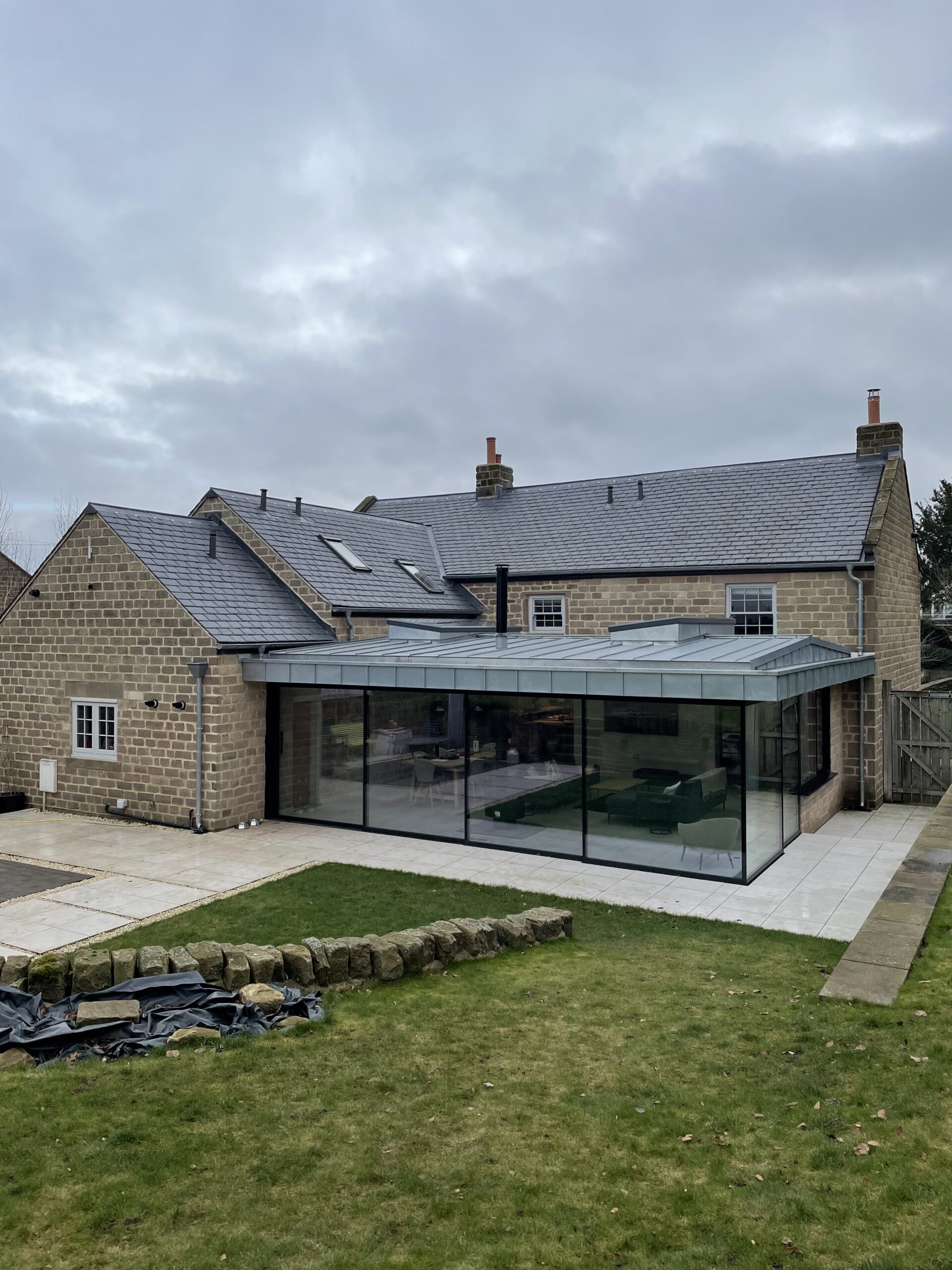
Internal moisture does not automatically prove either rainwater ingress or condensation. Both mechanisms should be investigated methodically.
Low-pitch metal roofing should be treated as a complete building-envelope system.
Neal Roofing does not regard the zinc covering in isolation. Substrate, insulation, vapour control, airtightness, interfaces, sequencing and temporary protection all influence eventual performance.
When investigating existing roofs, both conventional water ingress and concealed condensation mechanisms should be considered rather than assuming every internal stain is caused by an external roof leak.
Relevant technical guidance
Management of moisture
Guidance covering moisture risk, condensation and building-envelope design.
02 / BS 6229Low-slope roof principles
Relevant considerations for roof build-ups, moisture and low-slope construction.
03 / LibraryBritish Standards
Neal Roofing’s wider technical standards and regulations library.
04 / RegulationsBuilding Regulations
Wider regulatory requirements relevant to roofing and building-envelope works.
Related guidance
Concerned about condensation or unexplained moisture beneath a zinc roof?
Neal Roofing undertakes technical roof inspections, defect investigation, repair specification and specialist roofing works across Yorkshire and selected projects throughout the UK.