ELZINC ALKIMI Zinc Roofing
A practical guide to ELZINC ALKIMI finishes, zinc roof systems, substrates, ventilation, thermal movement, longevity, maintenance and specialist installation.
What is ELZINC architectural zinc?
ELZINC produces titanium-zinc sheet and architectural finishes for fully supported roofing, façades and detailed metalwork.
Zinc is valued because it is lightweight, formable, durable and capable of following complex roof geometry. Its weathered surface develops a protective patina, while pre-weathered finishes give architects greater control over the initial appearance.
The material still depends on correct design. Tray length, pitch, seam system, substrate, ventilation, separating layer, clip layout, thermal movement and compatibility with adjacent materials all influence performance.
Choose the finish only after the roof build-up is resolved
Colour and texture are important, but the deck, moisture strategy, movement details and installation system determine whether the completed zinc roof performs.
Why choose zinc roofing?
Long service potential
Correctly specified zinc can provide long-term roof and façade performance.
Protective patina
The surface develops a protective weathered layer that contributes to durability.
Lightweight construction
Zinc can provide a relatively light covering compared with many traditional materials.
Complex geometry
The metal can be formed around curves, dormers, turrets, canopies and detailed junctions.
Architectural appearance
Standing seams and controlled finishes suit contemporary and heritage-led schemes.
Repairability
Local sections, seams and details can often be repaired without replacing the complete roof.
Low routine maintenance
Zinc normally requires inspection and drainage maintenance rather than regular painting.
Recyclability
Architectural zinc can be recovered and recycled at the end of service.
Finish choice
Natural, pre-weathered and pigmented surfaces allow a wide range of design responses.
Natural and pre-weathered zinc finishes
The ALKIMI family combines natural zinc with pre-weathered finishes designed to create an established visual character from installation.
Natural
Bright rolled zinc that develops its own patina progressively after exposure.
Slate
A darker grey appearance that can complement slate roofs and restrained palettes.
Graphite
A deep charcoal finish for strong contemporary contrast and shadow lines.
Crystal
A lighter grey finish that reflects more light and softens large metal areas.
Lava
A dark mineral-inspired finish suited to robust architectural schemes.
Oliva
A muted green-toned finish that can relate to planting, landscape and natural stone.
Review samples on the actual building
Orientation, sky conditions, adjacent masonry, slate, timber, glass and surrounding vegetation can change how a zinc finish appears.
How zinc is formed and installed
What should sit beneath a zinc roof?
Continuous timber decking
Traditional boards can provide a smooth, stable and ventilated support.
Approved sheet deck
Suitable grade, thickness, moisture condition and fixing pattern are essential.
System-specific use
Suitability depends on manufacturer approval, exposure class and build-up.
Separating layer
A compatible structured layer may support drainage, ventilation and underside protection.
Substrate requirements
- Smooth and free from protruding fixings.
- Dry enough for the approved system.
- Stable under temperature and moisture change.
- Continuous at seams and clip positions.
- Compatible with zinc and separating materials.
- Designed for wind and imposed loads.
Substrate risks
- Wet or recently treated timber.
- Rough or uneven deck surfaces.
- Unsupported sheet edges.
- Incompatible preservatives or adhesives.
- Trapped construction moisture.
- No clear ventilation or vapour-control strategy.
Warm roof versus ventilated cold roof
Warm zinc roof
- Insulation arranged to keep the structure warmer.
- Continuous air and vapour control is critical.
- Thermal bridges should be minimised.
- Build-up must be approved for zinc.
- Separating membrane must suit the system.
Ventilated zinc roof
- Continuous airflow cavity below the deck or zinc.
- Openings must remain clear at low and high level.
- Rooflights and penetrations interrupt airflow.
- Insect protection must not block ventilation.
- Moisture sources inside the building still need control.
Warm and ventilated build-ups should not be mixed casually.
The complete condensation, airtightness and drying strategy should be resolved before zinc installation begins.
Why zinc trays need fixed and sliding clips
Fixed clips
Establish the controlled fixed point and determine the direction of tray movement.
Sliding clips
Secure the zinc while allowing longitudinal expansion and contraction.
Tray length
Longer trays experience greater movement and require careful design.
Perimeter details
Eaves, ridges, abutments and penetrations must allow movement without opening.
Expansion joints
Long runs or complex geometry may need deliberate movement breaks.
Seam quality
Poorly formed seams can restrict movement or compromise weathering.
How zinc changes after installation
Natural patination
Natural zinc develops gradually and may initially appear uneven before becoming more uniform.
Pre-weathered finish
ALKIMI provides a controlled initial appearance while natural weathering continues.
Orientation
North-, south-, east- and west-facing elevations weather differently.
Urban exposure
Pollution, dust and runoff can affect appearance and cleaning needs.
Coastal conditions
Salt exposure and wind-driven deposits require product-specific assessment.
Runoff compatibility
Water from copper or incompatible materials can create staining or corrosion risk.
Do not promise perfect colour uniformity
Zinc is a living architectural surface. Orientation, water paths, handling, temperature and surrounding materials affect how it develops.
Where ELZINC can be used
Pitched roofs
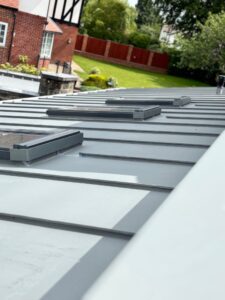
Standing seam systems create clean lines and long tray runs.
Low-pitch roofs
Possible within system-specific pitch and seam requirements.
Curved roofs
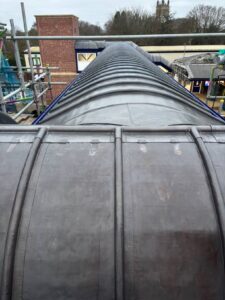
Zinc can follow barrels, domes and other complex forms.
Dormers
Useful for roofs, cheeks, flashings and integrated façade treatment.
Façades
Standing seam, flat lock and panel systems can continue the material vertically.
Rainwater goods
Gutters, outlets and downpipes can be coordinated with the roof finish.
Heritage buildings
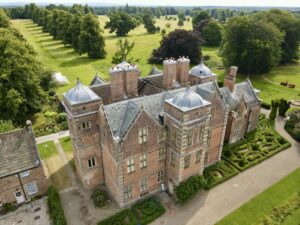
Natural or restrained finishes may suit approved conservation-led projects.
Commercial buildings
Suitable for large architectural envelopes where detail and maintenance are controlled.
Contemporary extensions
Zinc can create a clear contrast with brick, stone, timber and glass.
What affects zinc-roof longevity?
How should a zinc roof be cared for?
Visual inspections
Review seams, edges, flashings, penetrations and signs of distortion.
Clear drainage
Remove debris from gutters, outlets and water paths.
Protect finishes
Avoid abrasive cleaning, uncontrolled access and incompatible chemicals.
Check ventilation
Keep designed airflow routes open and investigate condensation signs.
Inspect after other work
Scaffold, solar, glazing and service work can puncture or scratch zinc.
Repair early
Local issues are easier to manage before water reaches the deck or insulation.
Specialist zinc roofing in Yorkshire
Survey
Assess geometry, structure, pitch, exposure, access and interfaces.
System selection
Choose standing seam, flat lock, cladding or detailed metalwork system.
Build-up design
Coordinate insulation, vapour control, ventilation, deck and separating layer.
Finish approval
Review ELZINC ALKIMI samples against the building and surrounding materials.
Setting out
Plan tray widths, seams, fixed points, penetrations and edge zones.
Installation
Form clips, trays, seams, flashings and bespoke details.
Inspection
Check workmanship, movement, drainage and concealed layers.
Handover
Provide product, warranty, inspection and maintenance information.
Discuss your ELZINC roofing project
Speak to Neal Roofing about ELZINC ALKIMI finishes, standing seam zinc, façades, warm-roof build-ups, architectural details and specialist installation.
ELZINC and zinc-roofing FAQs
What is ELZINC ALKIMI?
ALKIMI is a family of natural and pre-weathered architectural-zinc finishes designed for roofing, façades and detailed metalwork.
What is the difference between natural and pre-weathered zinc?
Natural zinc begins bright and develops a patina after exposure. Pre-weathered zinc has a controlled established appearance from installation.
How long does a zinc roof last?
There is no single guaranteed lifespan. Correctly designed and maintained zinc can provide very long service, but build-up, moisture, movement, exposure and workmanship all matter.
Does zinc rust?
Zinc forms a protective patina rather than rusting like untreated steel, although unsuitable moisture or materials can still cause corrosion.
Does zinc change colour?
Yes. Natural zinc patinates and pre-weathered finishes continue to respond to exposure, orientation and water paths.
What is standing seam zinc?
It uses long zinc trays joined with raised seams and fixed with concealed clips that permit thermal movement.
Can zinc be used on low-pitch roofs?
Some standing-seam systems can suit relatively low pitches, but the selected system, seam type, exposure and manufacturer requirements must be confirmed.
What substrate is used beneath zinc?
Common approved substrates include continuous timber boards, plywood and some OSB or proprietary decks within a suitable build-up.
Does zinc need ventilation?
Some roofs require a continuous ventilation cavity; others use an approved warm-roof system. The moisture strategy must be designed for the complete roof.
Why does zinc need sliding clips?
Sliding clips allow trays to expand and contract with temperature while remaining securely fixed.
Can zinc buckle?
Yes. Restricted movement, poor clip layout, excessive tray length or uneven substrates can cause distortion.
Can zinc be installed on plywood?
Yes, where the plywood grade, thickness, moisture condition, fixing and system approval are suitable.
Can zinc be installed on OSB?
Potentially, but only where the selected system and manufacturer approve the product and complete build-up.
Can zinc be used near the coast?
It may be suitable, but salt exposure, finish, runoff, maintenance and manufacturer advice require project-specific review.
Can zinc be used on heritage buildings?
Yes, where it is historically or architecturally appropriate and all planning or listed-building requirements are satisfied.
Can zinc be used for façades?
Yes. Standing seam, angle seam, flat lock and panel systems are widely used for façades and dormers.
Does zinc need painting?
No. Architectural zinc is normally selected for its natural or factory-applied finish rather than painted protection.
Can zinc be repaired?
Yes. Local trays, seams and flashings can often be repaired, but the method must preserve movement and compatibility.
Is zinc sustainable?
Zinc is recyclable and can provide long service. A full assessment should also consider extraction, manufacturing, transport and build-up performance.
Why is zinc roofing expensive?
Cost reflects specialist material, skilled labour, detailed setting out, complex interfaces and the need for a coordinated roof build-up.
What maintenance does a zinc roof need?
Routine work normally includes visual inspection, clearing drainage, checking ventilation and repairing accidental damage.
Can zinc be scratched?
Yes. Pre-weathered and natural finishes can be marked by poor handling, tools or site traffic.
How should an ALKIMI finish be selected?
Review physical samples against the actual façade, roof orientation, adjacent materials and natural light.
What should a zinc quotation include?
It should identify zinc finish, thickness, seam system, substrate, membrane, insulation, vapour control, ventilation, clips, details, access, warranty and exclusions.
Why choose Neal Roofing for zinc work?
Neal Roofing combines specialist metal-roofing experience with wider building-envelope knowledge covering roofing, insulation, leadwork and drainage.
Authoritative supporting information
Product ranges, warranties and technical requirements can change. Confirm the current manufacturer guidance before specification or installation.