Commercial Roofing Services
Survey-led roofing, planned maintenance, emergency response and capital works for individual commercial buildings and large property portfolios.
Roofing support built around operational properties
Neal Roofing supports landlords, property managers, facilities teams, hospitality groups, public-sector organisations and commercial occupiers across Yorkshire and the North East.
Commercial roofing requires more than completing an isolated repair. Work may need to protect customers, staff, stock, production, tenants and public access while meeting programme, reporting, safety and procurement requirements.
Our service model combines roof surveys, planned preventative maintenance, reactive response and larger refurbishment or replacement projects. For multi-site clients, the same reporting structure and quality expectations can be applied across the portfolio.
Move from repeated emergencies to managed roof assets
A structured programme records condition, prioritises defects, plans expenditure and reduces reliance on unplanned emergency attendance.
Commercial roofing services
Services can be commissioned individually or combined into an ongoing roof-management programme.
Roof condition surveys
Visual assessment, defect mapping, photographs, access limitations and recommended next actions.
Planned maintenance
Scheduled inspection, cleaning, local repair and ongoing condition monitoring.
Reactive leak response
Attendance, temporary weatherproofing, diagnosis and permanent repair planning.
Emergency storm repairs
Making-safe work and rapid control of active water entry or displaced materials.
Flat roof refurbishment
Local repair, overlay or complete replacement following condition and moisture assessment.
Pitched roofing
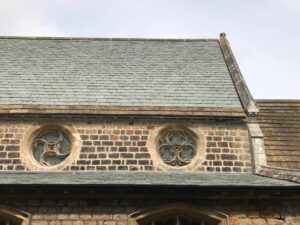
Slate, tile, stone and associated roof details for commercial and historic properties.
Industrial roofing
Sheeted roofs, rooflights, gutters, junctions and associated building-envelope interfaces.
Leadwork & hard metals
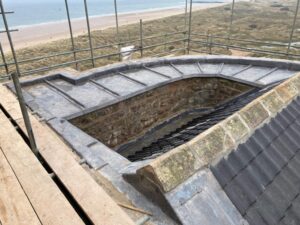
Lead, zinc and specialist architectural metal roofing and weathering details.
Rainwater systems
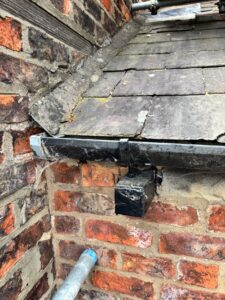
Gutters, outlets, downpipes, overflows and drainage defects affecting roof performance.
Rooflights & penetrations
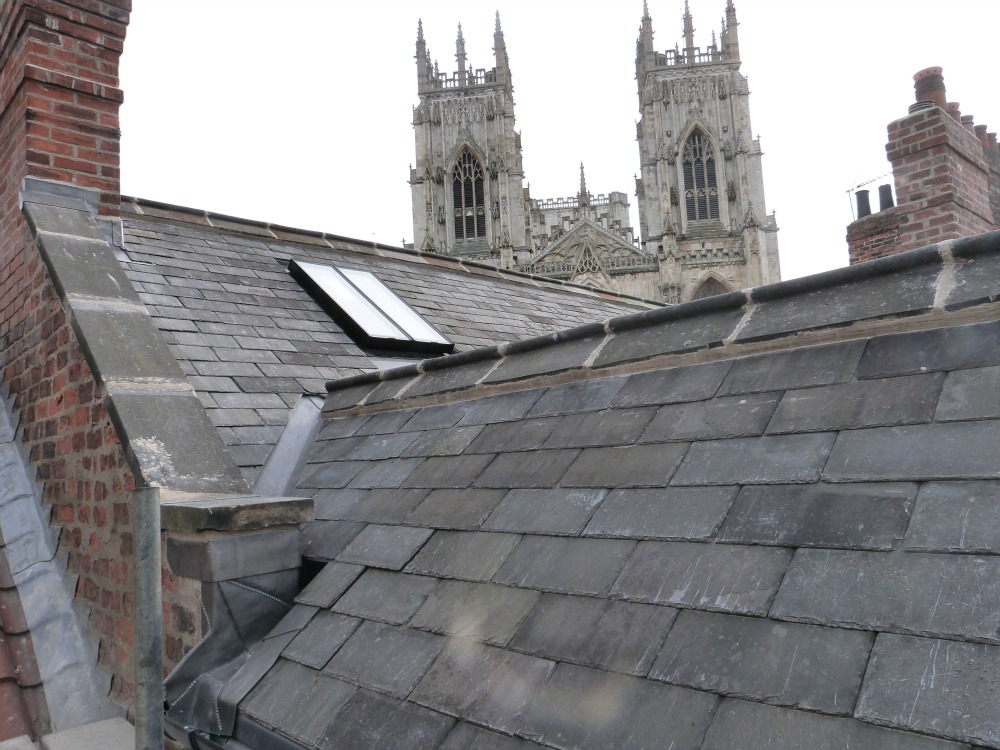
Repair, replacement and weathering of high-risk roof interfaces.
Solar-ready roofing
Roof assessment and refurbishment planning before commercial solar PV installation.
Capital projects
Programme-led roof replacement, phased refurbishment and estate improvement works.
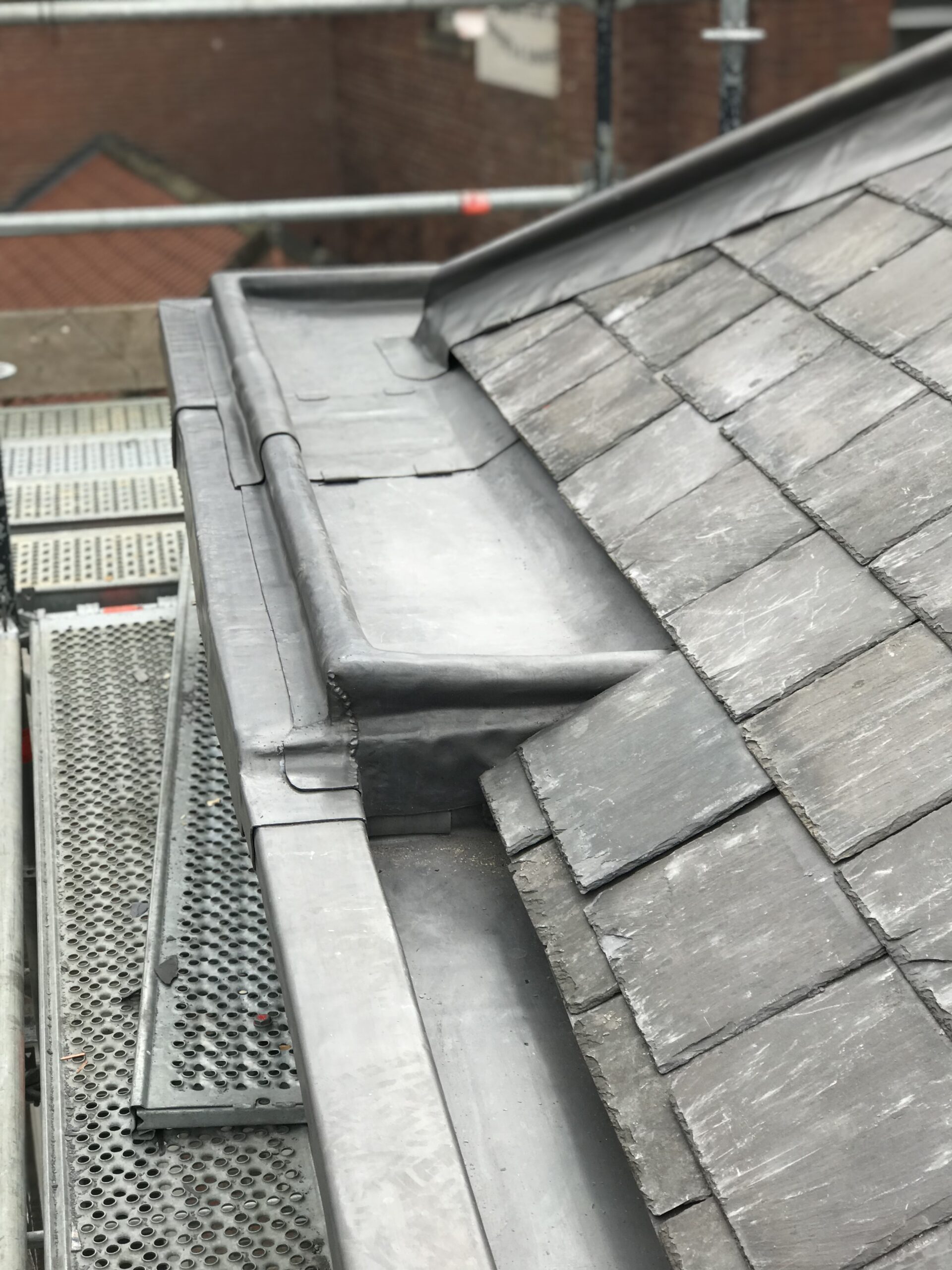
Skilled Teams. Controlled Delivery.
From occupied hospitality properties to warehouses, schools and managed estates, roofing work is planned around safety, access, operations and clear client reporting.
One roofing framework across multiple sites
Single point of contact
Central coordination for surveys, call-outs, quotations, programmes and reporting.
Consistent inspection format
Comparable records across different properties and roof systems.
Priority-based budgeting
Separate urgent defects from planned repairs and future capital renewal.
Approved materials
Portfolio specifications can identify preferred systems, details and replacement products.
Access planning
Coordinate work around tenants, customers, deliveries, production and restricted areas.
Repair history
Maintain records of defects, interventions, warranties and recurring problem areas.
Performance review
Track response, completion, recurring leaks and outstanding maintenance actions.
Capital planning
Build a multi-year programme around condition, risk, operational need and available budget.
What should a commercial roof maintenance programme include?
Inspection frequency should reflect the roof type, age, exposure, warranty, access, known defects and operational risk. Many estates use spring and autumn inspections, with additional checks after severe weather.
Review records
Check previous reports, repairs, warranties, leaks and known hazardous materials.
Plan safe access
Confirm fragile areas, edge protection, rooflights, access systems and exclusion requirements.
Inspect coverings
Review membranes, sheets, tiles, slates, laps, fixings, coatings and previous repairs.
Inspect interfaces
Check upstands, flashings, penetrations, rooflights, parapets and movement joints.
Clear drainage
Remove safe-to-access debris and identify blocked outlets, gutters or overflows.
Record defects
Photograph, locate and describe visible deterioration and access limitations.
Prioritise action
Separate urgent weatherproofing from routine maintenance and future renewal.
Update the plan
Revise the estate schedule, budgets and next inspection dates.
PPM does not guarantee that a roof will never leak
It improves visibility, catches defects earlier and supports better budgeting. Concealed failure, extreme weather or unexpected damage can still occur.
From leak report to permanent repair
Gather information
Site, roof type, internal impact, access, hazardous materials and weather conditions.
Control immediate risk
Protect people, stock and operations and provide temporary weatherproofing where practicable.
Identify likely cause
Trace defects using roof and internal evidence while stating any limitations.
Complete proportionate work
Undertake permanent repair when scope, access, materials and conditions allow.
Close the record
Provide photographs, findings, completed work and recommended follow-up.
A water stain does not always sit directly below the roof defect.
Water may travel along decks, insulation, purlins or service routes before appearing inside the building.
Survey, repair and refurbishment expertise
Roofing planned around the building’s use
Hospitality
Pubs, hotels and restaurants where customer access, trading hours and internal finishes must be protected.
Retail
Shops, retail parks and mixed estates requiring safe public interfaces and rapid leak response.
Industrial & logistics
Warehouses, factories and distribution centres with large roof areas, rooflights and operational constraints.
Education
Schools, colleges and campuses requiring safeguarding, asbestos awareness and holiday programming.
Healthcare
Occupied facilities where infection control, access and continuity require detailed coordination.
Offices
Managed workplaces, business parks and multi-let buildings with tenant and landlord interfaces.
Heritage & civic
Churches, listed buildings and public assets requiring traditional materials and conservation-led repair.
Residential portfolios
Blocks, estates and managed housing requiring consistent inspection and repair records.
What commercial clients should expect
Defined duties
Client, designer and contractor responsibilities should be understood and coordinated.
Planned safe access
Risk assessment, hierarchy of controls, supervision and suitable equipment.
Specific protection
Rooflights and fragile sheets require controls regardless of task duration.
Pre-construction information
Commercial dutyholders must provide relevant asbestos information before work can disturb materials.
Task-specific planning
Risk assessments and method statements should reflect the building and agreed scope.
Skilled teams
Operatives and supervisors require suitable knowledge, training and experience.
Approved systems
Products and components should be compatible, traceable and correctly installed.
Evidence at handover
Photographs, inspections, warranties, certificates and maintenance guidance.
Provide available building and hazard information early
Existing asbestos records, health-and-safety files, roof-access information, previous reports and operational restrictions help contractors plan proportionate and safe work.
Turning roof information into decisions
Agree the brief
Define properties, roof areas, access, outputs, timescale and intended use.
Review information
Study existing reports, repairs, warranties, asbestos data and known leaks.
Plan inspection
Select safe access methods and identify areas that cannot be inspected.
Capture condition
Record roof systems, details, drainage, defects and photographic evidence.
Classify urgency
Grade visible findings according to safety, weathering and operational risk.
Recommend action
Identify maintenance, local repair, investigation, refurbishment or replacement.
Forecast expenditure
Group actions into immediate, short-, medium- and long-term programmes.
Update records
Track completed work, outstanding actions, warranties and inspection dates.
Immediate risk
Active water entry, falling material or safety concern requiring rapid action.
Prompt repair
Defect likely to deteriorate or disrupt operations if left.
Planned maintenance
Work suitable for the next programmed visit or repair package.
Review condition
Currently serviceable item requiring future observation.
More evidence needed
Opening-up, moisture testing or specialist assessment required.
What affects project and maintenance cost?
Commercial roofing cannot be priced accurately from floor area or a photograph alone. Access, safety controls, roof build-up, operational constraints and reporting requirements can materially change the cost.
Roof area & complexity
Size, levels, plant, penetrations, details and roof geometry.
Access & protection
Scaffolding, MEWPs, edge protection, walkways and public controls.
Hazardous materials
Asbestos information, specialist surveys, controls and waste requirements.
Roof condition
Extent of defects, trapped moisture, substrate damage and previous repairs.
System specification
Membrane, insulation, fire performance, drainage and warranty requirements.
Operational restrictions
Trading hours, production, noise, deliveries, safeguarding and phased access.
Programme & mobilisation
Urgency, travel, out-of-hours work and repeat portfolio attendance.
Reporting
Survey detail, asset records, photographs, budget schedules and client portals.
Warranty & handover
Manufacturer inspections, guarantees, testing and completion records.
The cheapest repair is not always the lowest-cost decision.
Repeated patching can exceed the cost of planned refurbishment while allowing internal damage and disruption to continue.
Regional delivery with portfolio discipline
Broad roof capability
Flat, pitched, industrial, heritage, lead and building-envelope services.
Survey-led advice
Recommendations based on visible condition, constraints and client priorities.
Skilled teams
Experienced operatives supported by planning, supervision and quality controls.
Quick mobilisation
Responsive regional coverage for individual sites and wider portfolios.
Commercial communication
Clear updates for facilities managers, surveyors, owners and procurement teams.
Project coordination
Work planned around tenants, customers, staff and live operations.
Quality compliance
Defined specifications, approved materials, inspection and handover records.
Long-term support
From emergency attendance through maintenance and capital replacement.
Discuss your property portfolio
Speak to Neal Roofing about surveys, reactive repairs, planned maintenance, compliance reporting or phased capital works across Yorkshire and the North East.
Commercial roofing FAQs
What is commercial roofing?
Commercial roofing covers the survey, maintenance, repair, refurbishment and replacement of roofs on business, industrial, public-sector and managed residential properties.
What services does a commercial roofing contractor provide?
Services may include roof surveys, planned maintenance, leak response, emergency work, flat and pitched roofing, industrial sheeting, leadwork, drainage, rooflights and complete replacement.
What is planned preventative roof maintenance?
It is a scheduled programme of inspection, cleaning, local repair, reporting and future planning intended to identify deterioration before it creates larger failures.
How often should a commercial roof be inspected?
Frequency depends on system, age, exposure, warranty and risk. Many properties use spring and autumn inspections, with additional checks after severe weather.
Does regular maintenance prevent every roof leak?
No. It reduces risk and improves early detection, but concealed defects, unexpected damage and extreme weather can still cause leaks.
How quickly can an emergency roof leak be attended?
Response depends on location, weather, access, demand and the agreed service arrangement. Portfolio clients can discuss target response categories and escalation routes.
What information should I provide when reporting a leak?
Provide the full address, site contact, internal location, photographs, roof type if known, asbestos information, access details and the operational impact.
Can a commercial roof be repaired instead of replaced?
Often yes, where defects are local and the surrounding roof remains serviceable. Widespread moisture, substrate failure or repeated repairs may make refurbishment or replacement more economical.
How long does a commercial roof last?
Service life varies by roof system, installation, exposure, maintenance, drainage and use. A condition survey is more useful than relying on a generic lifespan.
How much does commercial roofing cost?
Cost depends on roof area, system, condition, access, safety controls, insulation, hazardous materials, operational restrictions, reporting and warranty requirements.
What is included in a commercial roof survey?
A survey may include roof identification, visible condition, photographs, defect locations, access limitations, urgency grading and recommendations for repair or further investigation.
Can drones be used for commercial roof surveys?
Yes. Drone imagery can safely record visible high-level defects, but it cannot confirm every concealed condition and may need physical follow-up.
Can thermal imaging find roof leaks?
Thermal imaging can identify temperature anomalies that may justify further investigation, but it does not by itself prove moisture or the exact leak route.
What is a commercial roofing maintenance contract?
It is an agreed arrangement covering inspection scope, attendance frequency, reporting, minor work, response procedures, rates and responsibilities.
Can one contractor manage roofs across several sites?
Yes. A portfolio arrangement can standardise surveys, priorities, communication, approved materials and expenditure planning across multiple properties.
What is an SLA for commercial roofing?
A service level agreement defines matters such as contact routes, response categories, reporting times, rates, escalation and performance review.
What are RAMS?
RAMS usually refers to risk assessments and method statements describing hazards, controls, sequencing, equipment and safe methods for the work.
Does CDM 2015 apply to roof maintenance?
CDM 2015 applies to construction work, including relevant repair and maintenance activities. Duties depend on the project structure and the parties involved.
Who is responsible for asbestos information?
The commercial dutyholder must manage asbestos risk and provide relevant information to those who may disturb materials during maintenance or repair.
Are old commercial rooflights fragile?
Many rooflights and sheets should be treated as fragile unless confirmed otherwise. Suitable controls are required for all work on or near fragile areas.
Can commercial roofs support solar panels?
Many can, but the roof condition, structure, fire strategy, drainage, access, warranty and expected remaining life should be assessed before installation.
What should a commercial roofing quotation include?
It should define scope, roof system, preparation, materials, details, access, safety controls, waste, programme, exclusions, inspections, warranties and provisional repairs.
How can facilities managers reduce roofing costs?
Maintain accurate records, inspect routinely, clear drainage, address small defects, coordinate portfolio purchasing and plan capital work before failure becomes urgent.
What qualifications should a commercial roofer have?
Requirements depend on the roof system and role. Assess training, competence, supervision, trade experience, insurance, accreditations and project evidence together.
Can roofing work continue while a business remains open?
Often yes, but access, noise, dust, falling-object risk, deliveries, weather protection and emergency routes require careful phasing.
What happens after a roof repair is completed?
The client should receive a completion update describing findings, work undertaken, photographs, limitations and any recommended future action.
Authoritative supporting guidance
- HSE: Health and safety in roof work
- HSE: Work at height guidance
- HSE: Summary of duties under CDM 2015
- HSE: Duty to manage asbestos in buildings
- RICS: Planned preventative maintenance guidance
Legal duties, technical guidance and building information should be checked against the actual project before work begins.