Neal Roofing’s York Training Facility Proposal
A factual retrospective on the proposed Sutton Road roofing, construction and renewable-technology training centre, its business-incubator plans and the planning committee’s February 2023 refusal.
A proposed regional centre for practical roofing skills
In October 2022, Neal Roofing published plans for a purpose-built training and business-development facility at its Sutton Road site near Wigginton.
The proposal combined workshop and classroom space for roofing, renewable technologies and related construction skills with six small-business incubator units and additional warehousing.
The objective was to support the next generation of roofers, improve access to practical training and create space where new businesses could establish and grow.
Planning outcome
City of York Council’s Planning Committee A refused the outline application on 2 February 2023. The committee accepted that the scheme offered economic and training benefits but concluded that these did not clearly outweigh the identified harm from inappropriate development in the Green Belt.
What happened to the training-facility application?
The outline application was considered by City of York Council’s Planning Committee A on 2 February 2023 and was refused by eight votes to three.
The application sought outline permission for business incubator units, warehousing and a regional training facility for roofing, biomass and stoves, with all detailed matters reserved.
Committee minutes record that the applicant argued the educational, skills and inward-investment benefits amounted to very special circumstances. Members nevertheless accepted the officer recommendation to refuse because the site was within the Green Belt and the benefits were judged not to clearly outweigh the resulting harm.
| Item | Verified position |
|---|---|
| Application reference | 22/01908/OUTM |
| Proposal | Business incubator units, warehousing and regional training facility for roofing, biomass and stoves. |
| Application type | Outline, with all matters reserved. |
| Committee date | 2 February 2023. |
| Decision | Refused. |
| Principal reason | Inappropriate development in the Green Belt; benefits did not clearly outweigh the identified harm. |
Which roofing and construction skills were included?
The proposal was built around practical areas already connected to Neal Roofing’s work, with scope to expand into wider technical sectors.
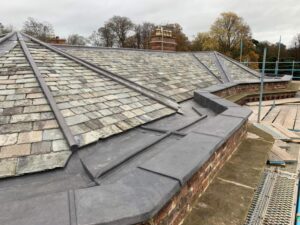
Slating and tiling
Setting out, fixing, weathering details, roof geometry, underlays, battens and practical application of slating and tiling standards.
Leadwork
Sheet selection, forming, bossing, welding, bay roofs, gutters, flashings and movement-aware detailing.
Zinc and hard metals
Fully supported metal roofing, standing seams, joints, interfaces, ventilation and architectural detailing.
Solar PV
Roof-integrated solar systems, weatherproofing interfaces, layout, mounting and coordination with electrical specialists.
Battery and energy systems
Awareness of battery storage, controls, system integration and the wider renewable-energy package.
Insulation and thermal performance
Roof build-ups, condensation control, ventilation, thermal bridging and energy-efficiency improvements.
Why does regional roofing training matter?
Roofing combines physical craft, technical standards, work-at-height safety and increasingly complex building-performance requirements.
Employers need routes for new entrants to gain structured experience while existing operatives require ongoing development as materials, standards and technologies change. Regional provision can reduce travel, connect employers with suitable training and make practical facilities more accessible.
Practical competence
Workshop rigs allow learners to repeat details, understand failures and practise safely before applying techniques on live buildings.
Employer involvement
Training is strongest when classroom knowledge, practical instruction and supervised site experience reinforce each other.
Career progression
Roofing careers can develop from operative and apprenticeship roles into heritage craft, supervision, estimating, surveying, design and management.
Responsible roofing
Training supports safer work, correct material use, regulatory compliance and more reliable outcomes for clients.
Yorkshire already has active training support
The Yorkshire Independent Roof Training Group supports roofing companies across Yorkshire and the Humber with training, funding guidance and responsible-roofing development. This shows the established demand for coordinated regional skills provision.
How can someone train to become a roofer?
There is no single route suitable for every learner or employer. Effective development usually combines formal learning with supervised practical experience.
- Roofing apprenticeship with on-the-job employment
- College or approved-provider technical learning
- Manufacturer-approved installation courses
- NVQ assessment based on workplace competence
- CSCS and relevant health-and-safety requirements
- Specialist leadwork, heritage or hard-metal training
- Work-at-height, access and equipment training
- Continuous professional and technical development
CITB describes construction apprenticeships as an earn-while-you-learn route combining hands-on experience with an academic qualification. The NFRC Roofing Careers Service also provides careers information and signposting for learners, employers and career changers.
Where can a roofing career lead?
Roofing can begin with practical site work and develop into specialist craft, supervision, estimating, surveying, contracts management and business leadership.
Progression is not automatic. It depends on experience, recognised competence, technical development, communication, leadership and the ability to plan work safely. The route also varies between domestic, commercial, heritage, leadwork, hard-metal, solar and building-envelope sectors.
Roofing includes site-based and office-based careers
Industry progression can include estimating, procurement, technical design, surveying, health and safety, project coordination, contract management and client service.
What does a competent roofing operative need to understand?
Practical skill must be supported by safe systems of work, product knowledge, supervision and an understanding of the standards relevant to the task.
Work at Height
Access, edge protection, fragile surfaces, weather conditions and rescue arrangements must be planned.
Material Handling
Roofers must move, store and use slate, tile, metal, membranes and tools safely.
Technical Information
Drawings, specifications, manufacturer instructions and codes of practice guide installation.
Building Performance
Roofers need awareness of insulation, ventilation, condensation, drainage and fire interfaces.
Quality Control
Setting out, fixings, laps, joints and weathering details must be checked before work is covered.
Communication
Site teams must coordinate with supervisors, clients, designers, scaffolders and other trades.
Why must modern roofers understand solar and energy systems?
Solar PV and energy-efficiency work create technical interfaces that cannot be separated from the roof covering.
A roof-integrated solar system affects drainage, weathering, battens, underlay, ventilation, loading, fire considerations and maintenance access. Electrical work must be completed by suitably competent specialists, but roofing teams still need system-specific knowledge to protect the building envelope.
Weatherproof integration
Panels, trays, flashings and surrounding coverings must form one compatible drainage system.
Building performance
Solar, insulation, ventilation and condensation control should be considered together during reroofing.
Cross-trade coordination
Roofers, electricians, designers and manufacturers need clear responsibilities and compatible documentation.
Explore Neal Roofing’s solar PV and battery-storage services.
What distinguished the proposed Neal Roofing training model?
Many roofing careers pages focus only on recruitment. The Sutton Road concept linked workshop training, live-site experience, specialist roofing, renewable technologies and small-business development.
Live-Site Context
Training could be reinforced through supervised work on residential, commercial, heritage and ecclesiastical buildings.
Specialist Craft
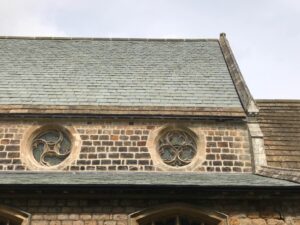
Leadwork, natural slate, heritage roofing and hard-metal systems require deeper practical development.
Renewable Integration
Solar, battery storage and thermal upgrades introduce new interfaces with the roof and building envelope.
Surveying Awareness
Understanding defects, moisture, drainage and existing construction improves practical decision-making.
Business Skills
Incubator units aimed to connect technical competence with systems, employment and enterprise growth.
Continuous Development
Manufacturer courses, toolbox talks, CPD and changing standards support experienced operatives as well as apprentices.
What were the proposed business incubator units?
The original scheme included six cost-effective units intended to support start-ups and small businesses alongside the training centre.
Each unit was described as having capacity for up to six employees. The intended model combined affordable workspace with access to practical training and operational support, reflecting Neal Roofing’s experience of businesses developing from the Sutton Road site.
Affordable workspace
Smaller premises designed to reduce the initial overhead of establishing a business.
Shared skills environment
Proximity to training and experienced businesses could support practical learning and stronger working systems.
Local employment
Growing owner-managed businesses can create jobs and retain technical skills within the local economy.
Business progression
Incubator space is intended as an early-stage platform rather than a substitute for long-term commercial premises.
How did the proposal address landscape and biodiversity?
The original article described a landscape strategy intended to integrate the development into its Green Belt setting and create ecological improvements.
- Retention of the established tree-screened setting
- Approximately 80 additional native trees proposed
- New wildflower-meadow areas
- Additional native hedgerow planting
- Bat and bird habitat features
- A dedicated wildlife pond
Environmental mitigation did not remove the planning conflict
The committee minutes record that other impacts could potentially be mitigated by condition, but the fundamental Green Belt harm remained. The economic, educational and environmental benefits were not judged sufficient to clearly outweigh that harm.
York roofing training facility FAQs
Was the Neal Roofing training facility approved?
No. City of York Council’s Planning Committee A refused outline application 22/01908/OUTM on 2 February 2023. This page records the proposal and its aims, not an approved or completed development.
What was proposed at Sutton Road?
The outline application covered business incubator units, warehousing and a regional training facility for roofing, biomass and stoves, with all detailed matters reserved.
Why did the council refuse the application?
The committee concluded that the proposal constituted inappropriate development in the Green Belt and that the identified economic and training benefits did not clearly outweigh the Green Belt harm.
What roofing skills did Neal Roofing propose to support?
The article described slating and tiling, leadwork, zinc and hard-metal roofing, solar PV and battery storage, insulation and thermal-efficiency skills.
How is roofing training normally delivered?
Training can combine college or approved-provider learning, practical workshop activity, manufacturer courses, site experience, apprenticeship assessment and ongoing health-and-safety development.
What is the Yorkshire Independent Roof Training Group?
YIRTG is a regional group supporting roofing employers across Yorkshire and the Humber with training, funding guidance, responsible roofing and business improvement.
What is a competent roofer?
A competent roofer has the relevant knowledge, training, experience and organisational capability for the work being undertaken. Competence should be evidenced through qualifications, cards, training, supervision, project experience and compliance—not assumed from a business name.
Why is renewable-technology training important for roofers?
Solar PV, battery storage, insulation and building-integrated systems create interfaces between electrical work, weatherproofing, structure, ventilation and fire safety. Roofers need system-specific knowledge as well as traditional roofing competence.
Did the proposal include small-business units?
Yes. The original article described six incubator units intended to provide cost-effective workspace and support for start-ups and entrepreneurs.
How can someone explore a roofing career with Neal Roofing?
Prospective applicants should review Neal Roofing’s current work-with-us information and contact the company about available employment, apprenticeship or training opportunities. Availability can change and should be confirmed directly.
How long does a roofing apprenticeship take?
Duration depends on the apprenticeship standard, training provider and roofing pathway. Apprenticeships combine paid employment, structured learning and end-point assessment.
Can adults retrain as roofers?
Yes. Roofing can be entered by school leavers, career changers and experienced construction workers, subject to employer opportunities and suitable training.
Is roofing a good long-term career?
Roofing can provide progression into specialist craft, supervision, estimating, surveying, contracts management and business ownership. It remains physically demanding and requires strong safety awareness.
What qualities make a good roofer?
Useful qualities include practical ability, attention to detail, reliability, teamwork, problem solving, communication, physical fitness, safety awareness and willingness to keep learning.
Can roofers work with solar PV systems?
Roofers can install or prepare roofing components and weatherproofing interfaces within their competence. Electrical work must be completed by suitably competent electrical specialists.
Explore roofing skills, projects and specialist services
Interested in roofing work or training?
Neal Roofing employs trained roofing, leadwork, heritage, surveying and management personnel. Current opportunities, apprenticeships and training availability should be confirmed directly with the company.