


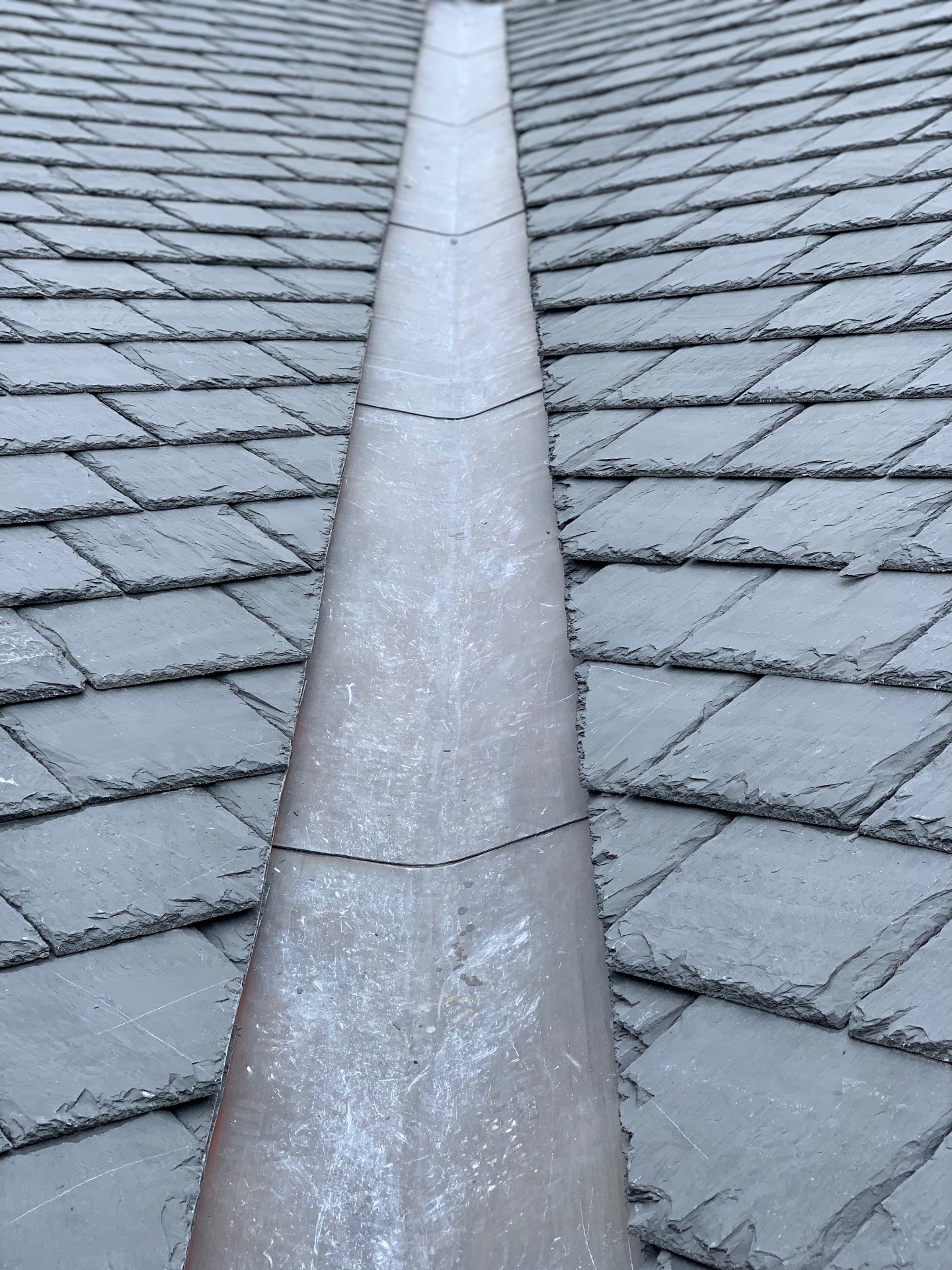
Lead Valley Replacement: Code 5 Lead Roof Repair
A two-day roof-repair project replacing two failed valley linings with Code 5 lead, re-cut tiles, fibre-cement undercloaks and renewed ridge details.
Replacing Two Failed Lead Valley Linings
Neal Roofing was instructed to remove and replace two defective valley linings at a residential property in Haxby, York.
The existing lead details had reached the end of their useful life and no longer offered dependable weather protection. A full replacement was selected instead of another temporary patch.
The completed work included new Code 5 lead valley linings, tile cutting and rebedding, fibre-cement undercloaks and repair of the adjoining ridge details.
Full valley renewal addressed the failed lining and its surrounding roof interfaces together, rather than treating only the visible leak point.
Why Do Lead Roof Valleys Leak?
Age and Fatigue
Long-term thermal movement can eventually cause cracking or fatigue in unsuitable or ageing lead.
Poor Support
Uneven, decayed or inadequate substrates can prevent the lining from draining and moving correctly.
Incorrect Sheet Sizes
Overlarge bays or badly placed joints can increase stress as the metal expands and contracts.
Blocked Drainage
Moss, leaves, mortar and tile fragments can slow water and increase the risk of backing up.
Defective Tile Cuts
Tiles cut too tightly or bedded badly can restrict drainage or direct water beneath the covering.
Temporary Repairs
Sealants, coatings and expanding foam may conceal the cause without creating a durable repair.
Project Scope
Remove Existing Lead
The failed valley linings were carefully stripped out to expose the supporting details.
Inspect the Substrate
The valley support and surrounding roof interfaces were checked before new lead was installed.
Install Code 5 Lead
Both valleys were relined with new Code 5 rolled lead sheet.
Fit Undercloaks
Fibre-cement undercloaks were introduced beneath the re-cut roof tiles.
Re-Cut and Re-Bed Tiles
Tiles were formed to suit the valley and bedded with a suitable mortar mix.
Remove Expanding Foam
Inappropriate foam was removed from the offset roof ridge detail.
Re-Bed Ridge Tiles
The ridge units were reset to complete the adjoining roof weathering.
Final Drainage Check
The valleys and connected details were checked before completion.
Project Handover
The two-day repair was completed and the finished work reviewed with the client.
Existing Valley Condition
The original valley linings were failing and no longer provided reliable weather protection at the roof intersections.


Why Use Code 5 Lead for a Roof Valley?
The correct lead code depends on the detail, dimensions, support, exposure and movement requirements. In this project, Code 5 lead was selected for the renewed valley linings.
Durability
Code 5 provides a robust sheet thickness for suitable gutter and valley applications.
Workability
It can be formed and dressed accurately by experienced leadworkers.
Movement
Correct bay sizing and joint design allow for natural expansion and contraction.
Weathering
Properly formed lead creates a continuous drainage path through the roof intersection.
Compatibility
The lining can integrate with tiles, undercloaks, ridges and adjacent roof details.
Specialist Installation
Performance depends on support, sizing, laps, clipping, dressing and workmanship.
Lead thickness alone does not guarantee performance. The substrate, falls, bay sizes, joints, laps and surrounding tile details must all work as one system.
The Finished Lead Valley Replacement
The project was completed successfully within two days, replacing both failed valley linings and correcting the adjoining ridge and tile details.


The full replacement restored a defined drainage route through both roof intersections and removed the unsuitable expanding-foam repair from the offset ridge.
What Should the Written Quote Include?
Lead Valley Replacement FAQs
What is a lead roof valley?
A roof valley is the internal intersection between two roof slopes. Lead can be used to form a durable lining that directs water safely toward the gutter.
How do I know if a lead valley is leaking?
Warning signs include internal staining below the valley, visible splits, lifted edges, corrosion, blocked drainage or repeated failed patch repairs.
Can a leaking lead valley be repaired?
Local defects may sometimes be repaired, but widespread fatigue, poor support or repeated leaks can make full replacement the better option.
How long should a lead valley last?
Service life depends on lead code, sheet sizes, support, workmanship, exposure and maintenance. Correctly designed and installed lead can provide long service.
Why was Code 5 lead used on this project?
Code 5 was selected to suit the renewed valley detail, subject to the dimensions, support and movement requirements of the project.
Why must roof tiles be re-cut around a valley?
Correctly cut tiles create a consistent water channel and help prevent water, debris or mortar from obstructing the lining.
What is a fibre-cement undercloak?
It is a durable sheet component installed beneath selected tile or mortar details to create a stable edge and support the finish.
Is expanding foam suitable for ridge repairs?
Generic expanding foam is not a suitable substitute for a correctly designed ridge fixing and weathering system.
How long does lead valley replacement take?
Duration depends on access, valley length, tile work, substrate repairs and weather. This two-valley project was completed in two days.
Does lead valley replacement need scaffolding?
Often, yes. The access method depends on roof height, slope, duration, surrounding structures and the work required.
Should the valley substrate be inspected?
Yes. New lead should not be installed over decayed, uneven or unsuitable support.
Can Neal Roofing inspect a leaking valley?
Yes. Neal Roofing can inspect accessible roof valleys and adjoining details before preparing a repair or replacement quotation.
Do You Need a Lead Valley Inspected?
Neal Roofing can inspect defective valleys, flashings, gutters, chimneys and surrounding roof details before recommending an appropriate repair.