


Re-Roofing a House: An Investment, Not Just a Cost
A complete guide to roof surveys, choosing a roofing contractor, comparing quotations, BS 5534, leadwork, insulation, Building Regulations and project handover.
A New Roof Should Be Judged by Long-Term Value
Re-roofing is a major property investment because it protects the structure, improves reliability and gives access to details that cannot be renewed through surface repairs alone.
The correct decision is not simply which quotation is lowest. Homeowners should compare the inspection, specification, materials, access, leadwork, insulation, ventilation, drainage, guarantees and hidden-defect procedure.
A skilled roofing contractor should explain why replacement is recommended, what can be retained and how the complete roof build-up will perform.
A cheaper roof can become more expensive if it omits scaffold, timber repairs, compliant fixing, drainage, lead interfaces or the documents needed at completion.
When Is Re-Roofing Better Than Continued Repairs?
Recurring Leaks
Multiple leaks or repeat failure after local repairs can indicate wider deterioration.
Widespread Covering Failure
Broken, slipping or delaminating slates and tiles across several slopes can make patching poor value.
Failed Underlay
Old felt can become brittle, torn or ineffective as secondary weather protection.
Defective Battens
Undersized, decayed or poorly fixed battens may require the covering to be removed.
Leadwork Failure
Old gutters, valleys and flashings may need reconstruction alongside the roof covering.
Major Refurbishment
Re-roofing can coordinate insulation, ventilation, rooflights, chimneys and rainwater systems.
What to Look for in a Re-Roofing Contractor
Relevant Projects
Ask for evidence involving the same roof covering, property type and complexity.
Detailed Specification
The contractor should describe coverings, membrane, battens, fixings, leadwork and associated repairs.
Insurance
Request evidence of appropriate public liability and employer-related insurance.
Health and Safety
Access, scaffold, public protection and work-at-height controls should be planned.
Skilled Teams
Slate, tile, lead and heritage details should be assigned to operatives with relevant experience.
Written Guarantee
Confirm the scope, duration, exclusions and process for reporting a defect.
What Should Be Assessed Before Pricing?
What Does BS 5534 Cover?
BS 5534 provides recommendations for the design, performance and installation of pitched roofs using slates, tiles, shingles and associated components.
Wind Loading
Fixing specifications should reflect roof geometry, location, exposure and covering type.
Slates and Tiles
Covering selection, pitch, headlap and fixing should form one coordinated design.
Roofing Battens
Battens should be suitable in size, strength, grading and treatment for roofing use.
Underlays
The membrane should suit the roof design and be installed with correct laps, restraint and detailing.
Ridges and Hips
Mechanical fixing and compatible dry-fix or mortar details should be specified.
Workmanship
A compliant product can still fail if setting out, fixing or interface work is poor.

BS 5534 is a code of practice for the roof design and installation. It is not, by itself, a certificate that a particular slate or tile is suitable for every roof.
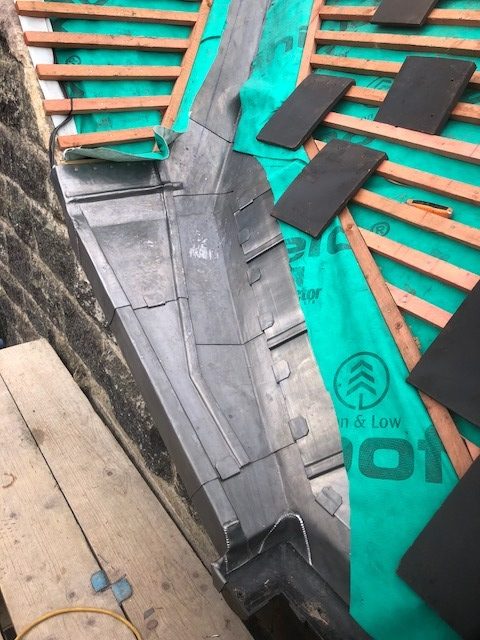
Leadwork Must Be Part of the Re-Roofing Design
A new roof covering cannot perform reliably if ageing flashings, valleys, gutters and chimney interfaces are left unresolved.
Chimney Flashings
Aprons, soakers, stepped flashings and back gutters should integrate with slate, tile and masonry.
Valleys and Gutters
Lead requires suitable support, falls, sheet sizes, joints and movement allowance.
Wall Abutments
Weathering details should be renewed where the new covering meets walls or raised structures.
Bay and Canopy Roofs
Connected lead roofs may need inspection and inclusion within the wider project scope.
Skilled Installation
Bossing, dressing, clipping and welding require specialist tools and experience.
Written Specification
The quote should state which lead details are retained, repaired or replaced.
What Happens During a Full Re-Roof?
Pre-Start Planning
Confirm survey findings, approvals, scaffold, materials, programme and site arrangements.
Access and Protection
Install safe working access and protect occupants, neighbours, paths and vulnerable features.
Controlled Strip-Out
Remove coverings in planned areas while managing weather risk and salvageable materials.
Hidden-Defect Review
Inspect exposed timber, masonry, decks and gutter substrates before covering them again.
New Roof Build-Up
Install membrane, battens, ventilation, insulation and coverings to the agreed specification.
Interfaces and Drainage
Complete leadwork, chimneys, valleys, ridges, verges, gutters and outlets.
Inspection
Check fixing, alignment, details, drainage and outstanding work before scaffold removal.
Handover
Provide agreed guarantees, invoices, approvals, photographs and maintenance advice.
Aftercare
Explain how to report concerns and maintain gutters, chimneys and roof interfaces.
What Should You Receive at Handover?
- Final invoice identifying the completed work.
- Written workmanship guarantee and applicable exclusions.
- Manufacturer warranties where products provide them.
- Building Regulations documentation where required.
- Electrical or solar documentation where related work formed part of the project.
- Photographs of concealed work where agreed.
- Maintenance and inspection guidance.
- Confirmation of any retained limitations or future priorities.
Plan Your Re-Roofing Project
Re-Roofing FAQs
How do I know whether my house needs re-roofing?
Recurring leaks, widespread covering failure, defective underlay, decayed battens and repeated leadwork problems can make replacement better value than continued repairs.
Is a new roof an investment or just a cost?
A properly specified roof protects the building fabric, reduces recurring repair risk and can improve the property’s long-term marketability and maintenance position.
What does BS 5534 mean for a homeowner?
It provides recognised recommendations for the design and installation of pitched slate and tile roofs, including fixings, battens, underlays and associated components.
Should leadwork be replaced during a re-roof?
Defective or unsuitable flashings, valleys and gutters should normally be included. Sound lead may sometimes be retained following inspection.
How many re-roofing quotes should I obtain?
Two or three detailed quotations can help, provided each contractor is pricing the same scope, material quality and access requirements.
How long does re-roofing a house take?
Duration depends on size, roof form, access, weather, structural repairs, chimneys, leadwork and the selected materials.
Can I stay in my house during re-roofing?
Usually, although the work creates noise, vibration and temporary disruption. Access and protection arrangements should be explained before the start.
Does re-roofing require Building Regulations approval?
It commonly can, particularly where a significant proportion of the roof covering or a thermal element is renewed. Confirm the approval route before work starts.
What happens if rotten timber is uncovered?
The contractor should record the defect, explain the required repair and obtain approval under the agreed variation process.
What guarantee should a new roof have?
The written contract should state the workmanship guarantee, duration, exclusions and any separate manufacturer warranties.
Should I choose the cheapest re-roofing quote?
Not automatically. Compare scaffold, materials, fixing, leadwork, insulation, drainage, hidden defects, approvals and guarantees before comparing the final price.
Can old slate be reused?
Sound slate may be reusable after careful stripping and sorting, with compatible replacement slate used for shortages.
Arrange a Re-Roofing Survey with Neal Roofing
Our skilled teams can inspect roof coverings, leadwork, chimneys, access, insulation and drainage before preparing a detailed written quotation.